
47. Pizzutello grapes of Tivoli
History
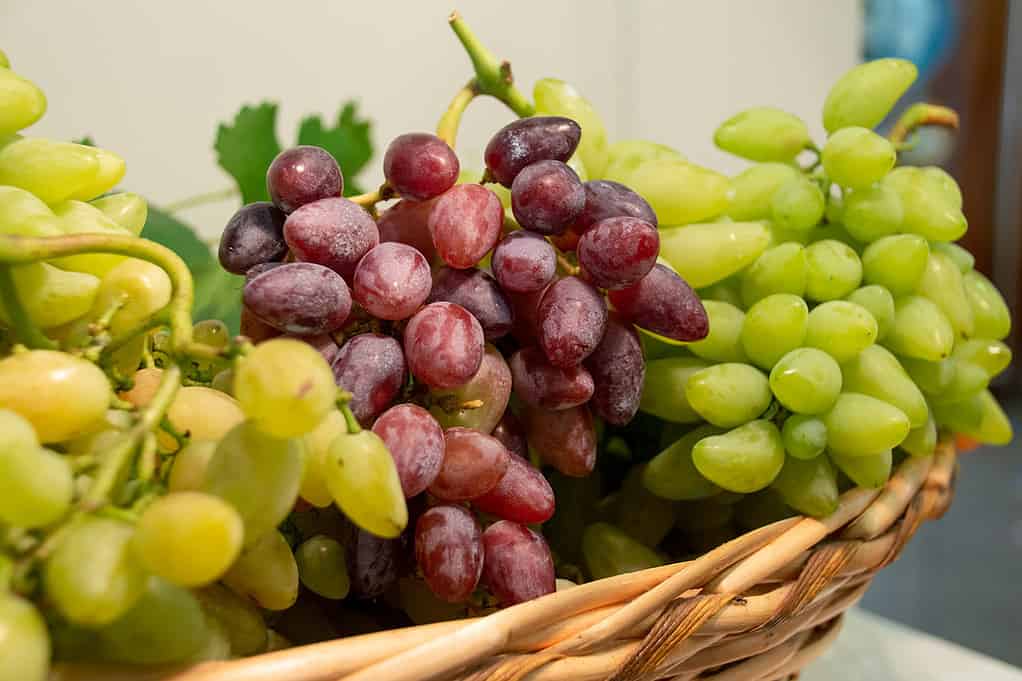
The Pizzutello di Tivoli is a table grape with an unusual appearance due to its shape, which is elongated, dactyliform and curved in the shape of a cornet, so much so that it is also known as the 'horned grape'. It has been cultivated since time immemorial in the famous city of Tiburtina and was already known to the Romans, as witnessed by Pliny in his Naturalis Historia and Columella, who speak of this grape 'praelongis dactitys' exclusive to the area of Tibur and Pompeii. According to Zappi, a contemporary of Cardinal Ippolito d'Este, this grape was imported from France and transplanted to Tivoli in the 16th century by the Cardinal himself, to shade the terraces of the famous Villa d'Este. Eleonora d'Este herself, who was at the Villa d'Este in 1575, wrote to the Court of Ferrara as follows: 'In the gardens of the villa at Tivoli there is an abundance of Pizzutello. It is very tasty to the palate and keeps the stomach well [...], they believe it makes the eyes beautiful'. The qualities of this fruit were also praised by Pope Leo XII's doctor, who wrote in 1823: 'Pizzutello is a pulpy, crunchy grape that is easy to digest, [...] so that I prescribe it to sick people, with happy results'.
Over the following centuries, the cultivation of this grape variety must have been widespread in the Tiburtine lands, which were divided into small plots, locally called 'Orti' (vegetable gardens) because of the careful order and the need for irrigation with water from the Aniene river. Until the 1970s, seasonal production had to reach the order of several tonnes and the 'pizzuta' grapes were never to be missing from the stalls of Rome's district markets. Famous is the Sagra del Pizzutello that has been held in the first half of September for over seventy years.
The product
Pizzutello di Tivoli has an intense and uniform yellow colour. Its medium olfactory intensity is characterised by marked fruity notes typical of ripe grapes and vegetal hints. The taste is sweet with a delicate acidulous note. The flesh is fleshy and crunchy. Medium aromatic persistence.

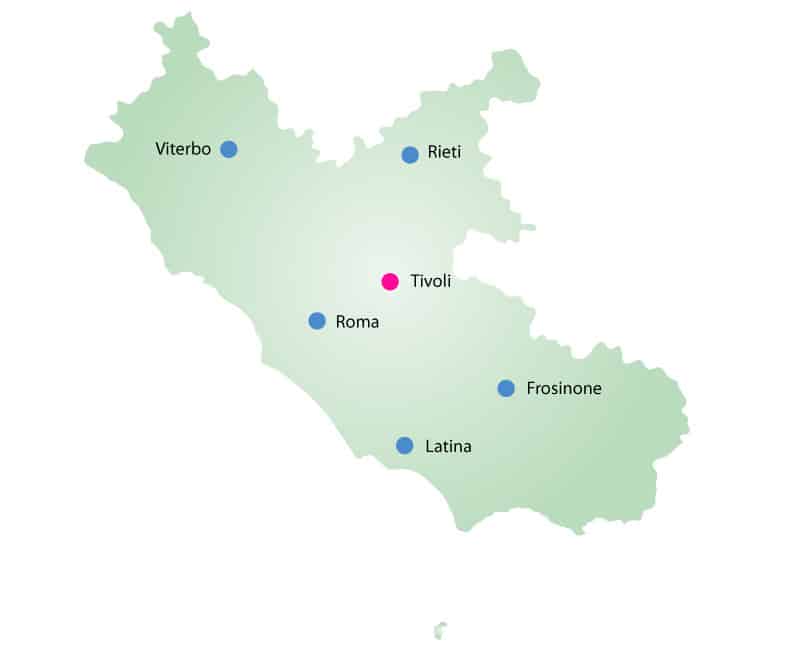
TIVOLI AND ITS MONUMENTAL VILLAS
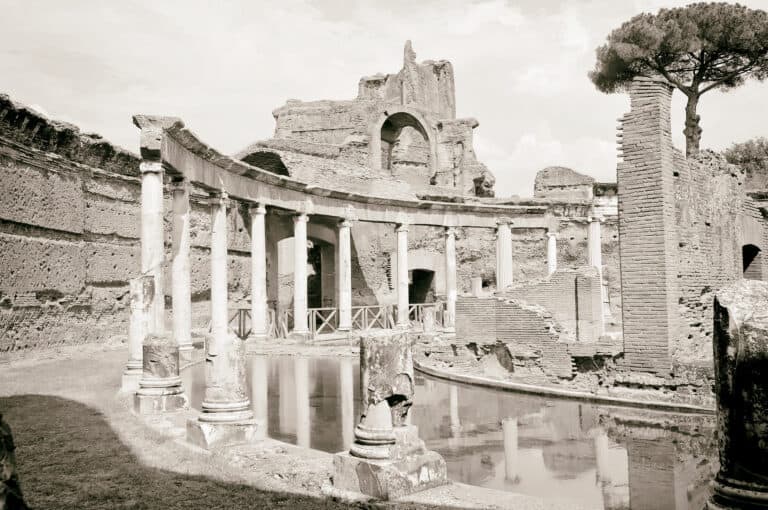
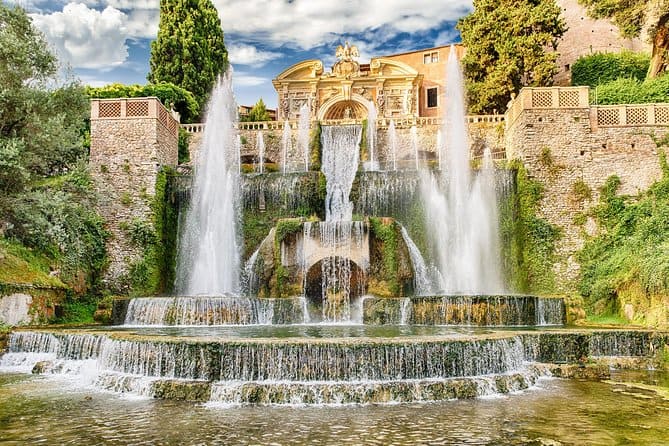
In the territory of Tivoli the upper basin of the Aniene River ends, giving rise to spectacular waterfalls and verdant countryside. It was precisely the beauty of these places that must have attracted the Emperor Hadrian, who between 118 and 128 AD wanted to build the Villa Adriana complex not far from the city. The Villa preserves on no less than 16 hectares a series of monumental buildings inspired by Greek and Hellenistic culture. The archaeological area today preserves the Pecile, a monumental four-sided portico for strolling, the complex of the Small and Large Baths, the Canopus, a large rectangular basin adorned with statues, the Imperial Palace and the Maritime Theatre, an artificial island used by the emperor to isolate himself from the rest of the world. Many centuries later, the same scenery must have fascinated Cardinal Ippolito d'Este, governor of the city in 1550, who had his Villa designed by Pirro Ligorio and channelled the waters of the Aniene to feed the splendid fountains. What makes the villa monumental are its Italian-style gardens and water features. The nearby Villa Gregoriana, on the other hand, owes its existence to Pope Gregory XVI who in 1832 promoted a massive hydraulic engineering project to divert the waters of the Aniene, which were prone to continuous flooding. By channelling the waters of the river in a double tunnel, he created a waterfall over 120 metres high and a park of woods, paths and natural caves to which he gave his name.