
45. Sagnozzi of Riofreddo
History
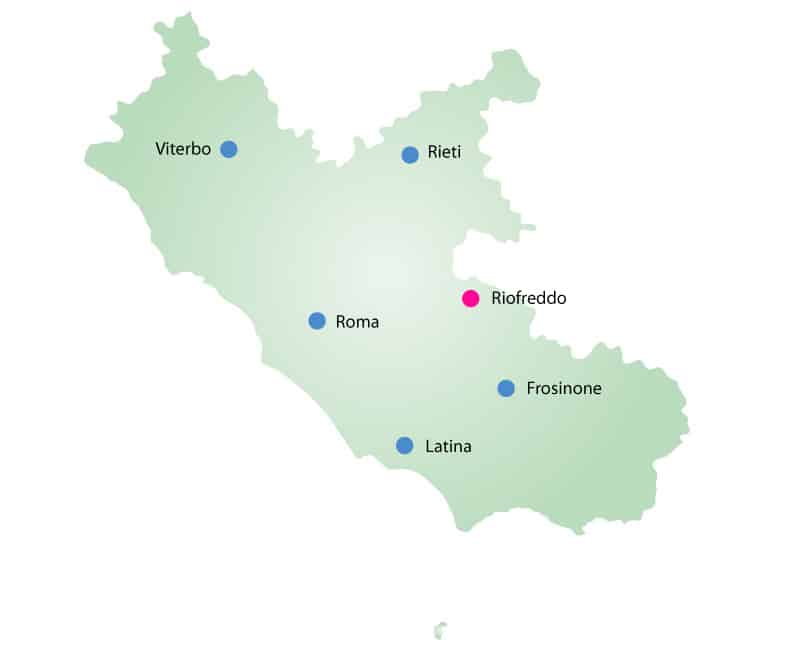
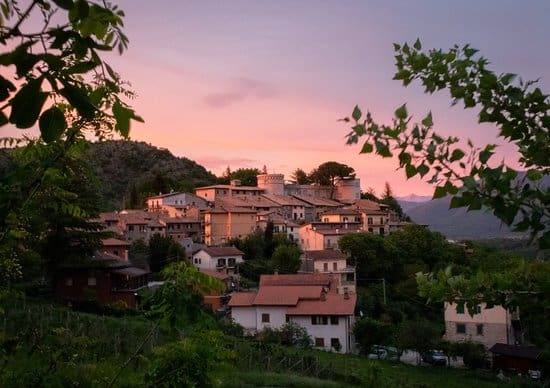
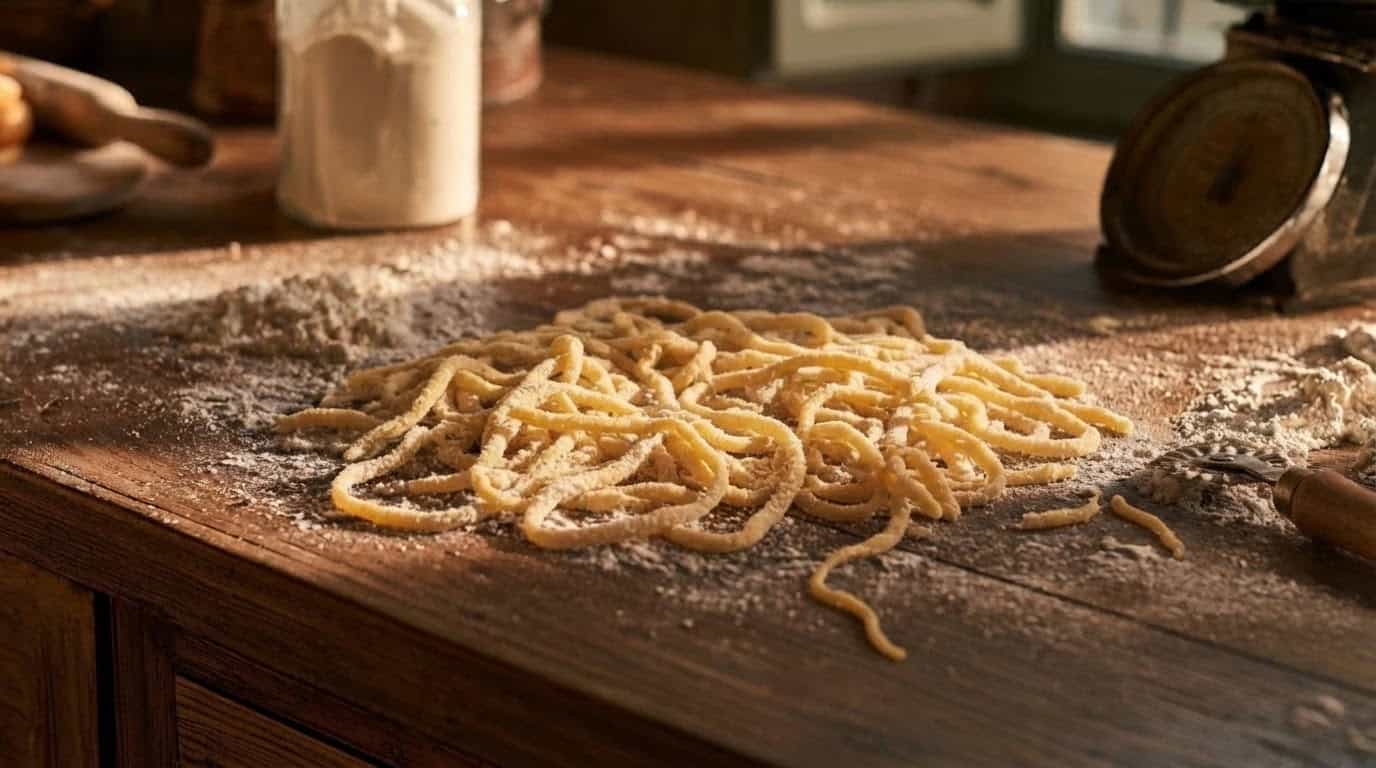
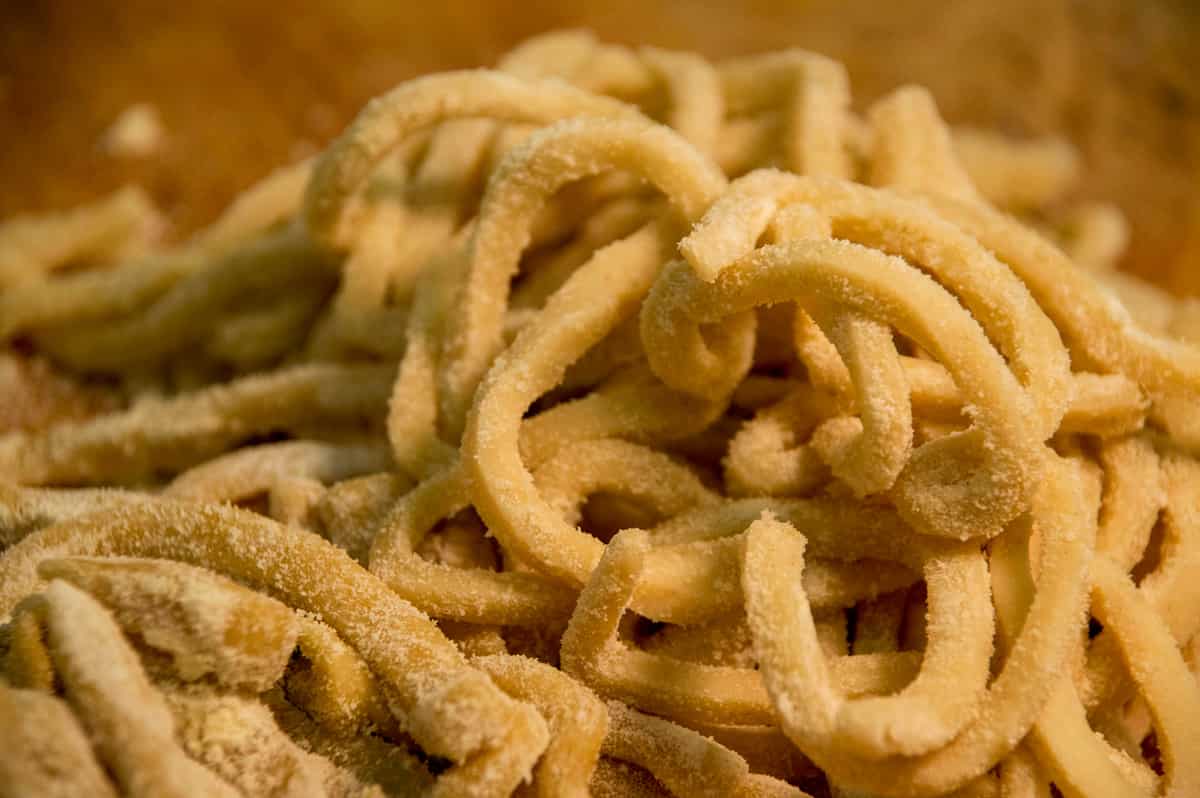
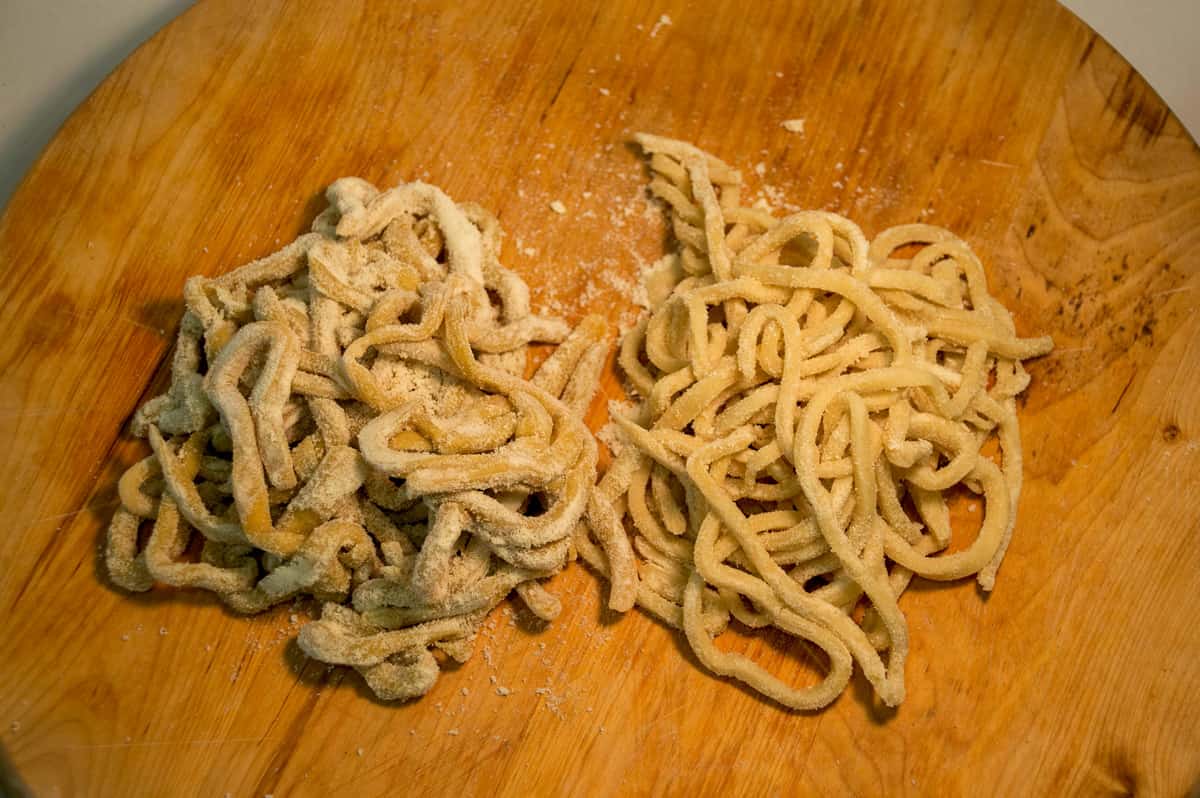
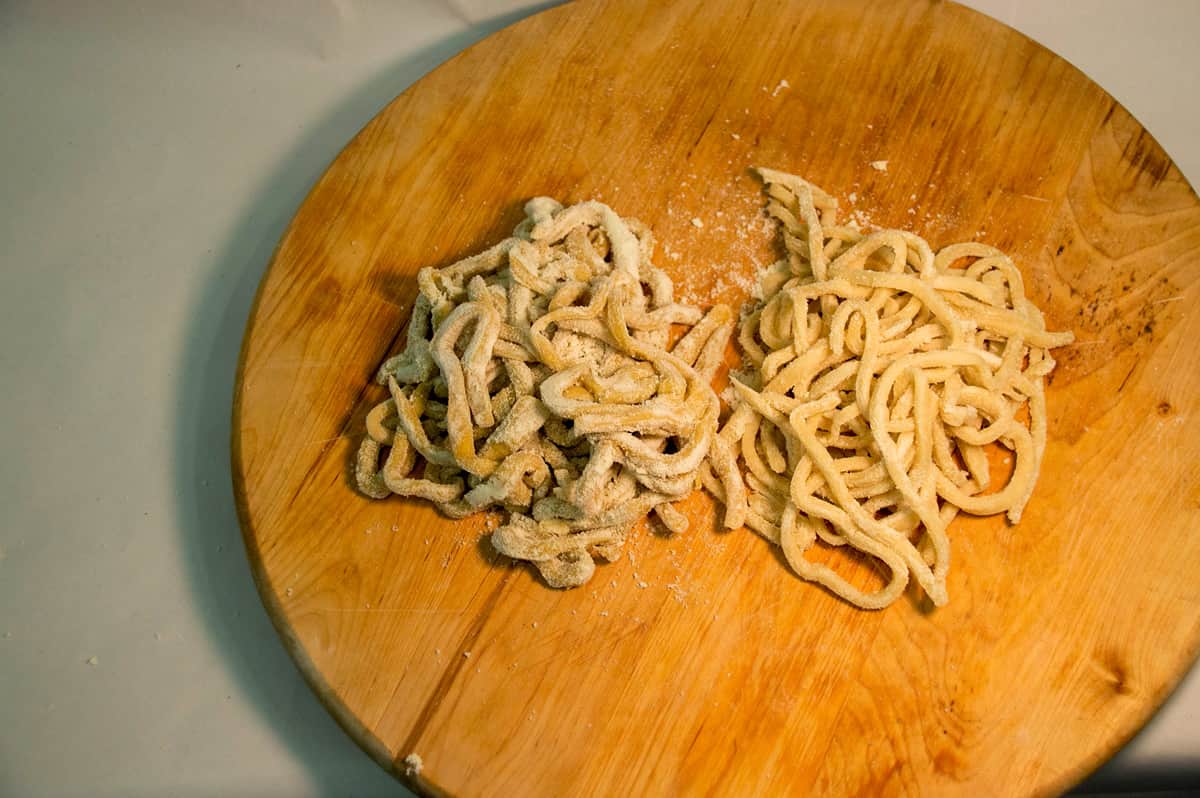
In this small medieval village of less than a thousand inhabitants, located in the province of Rome almost on the border with Abruzzo, where the artistic and architectural traces of its origins are still preserved (such as the arch of Santa Caterina, the beautiful frescoes of the Church of the Santissima Annunziata or the ruins of the ancient monastery of San Giorgio), this first dish linked to the poorest and most genuine peasant tradition is prepared. Sagnozzi are in fact a fresh pasta made with only durum wheat flour, water and salt, without eggs to favour preservation for long periods, similar in shape to a spaghettone. The name Sagnozzi is a dialect variant of the more common sagne, a term widely used throughout central Italy to indicate a homemade pasta made according to widespread peasant traditions. The recipe calls for the mixing of just two ingredients and obtaining a thin sheet of pasta that, after being rolled onto itself, is cut by hand very roughly, until obtaining a shape similar to large spaghetti. The most typical sauce that accompanies them is what they call in the village 'sellaru e pummidoro', a simple sauce made with celery and fresh tomatoes. Now in its 24th year, the Sagnozzi festival is organised every year in August and allows guests to visit the beautiful village and taste the Sagnozzi with 'sellaru e pummidoro' or with a condiment of mushrooms that is naturally local.
The product
Sagnozzi are uniformly light in colour and are characterised by high integrity after cooking. The high olfactory intensity is characterised by notes of cereals and flour combined with a slight hint of toast. The taste is harmoniously sweet with a slight salty note. Good consistency and elasticity.
THE ORATORY OF THE HOLY ANNUNCIATION IN RIOFREDDO
Riofreddo, whose name seems to derive from the local climate – which is generally rather harsh, especially when north-easterly or northerly winds blow – was once the estate of important noble families, including the Colonna family, who lived in the village and endowed it with fine religious buildings.
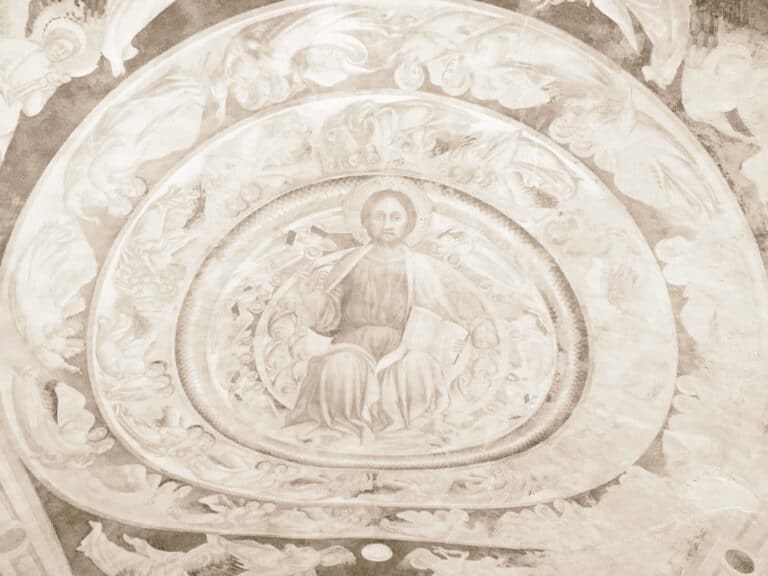
In 1422, at the very centre of the village, at the behest of Antonio Colonna, the Oratory of the Santissima Annunziata was built: a simple rectangular hall with a barrel vault which, however, houses a true pictorial gem: a splendid cycle of frescoes clearly influenced by Giotto, the work of a local artist whom some scholars link to Arcangelo di Cola da Camerino.
The vault features a spectacular vision of Christ in Majesty, surrounded by choirs of angels. Outside the circles, angels can be seen carrying the souls of the resurrected to heaven, as a sign of comfort within the hospital context of the Annunziata, where the Oratory served as a funeral chapel. On the back wall, above the altar, is depicted the biblical scene of the Annunciation of the Angel to Mary, with the building’s architecture evoking the geometric forms of the heavenly Jerusalem.
The lunette on the opposite façade depicts the Crucifixion, with Jesus dying on the cross set against the rocky landscape of Golgotha, accompanied by the weeping of the angels flying around the cross. Finally, the side walls are decorated with faux drapery featuring geometric and floral motifs.