
41. Corenese bread from Coreno Ausonio
History
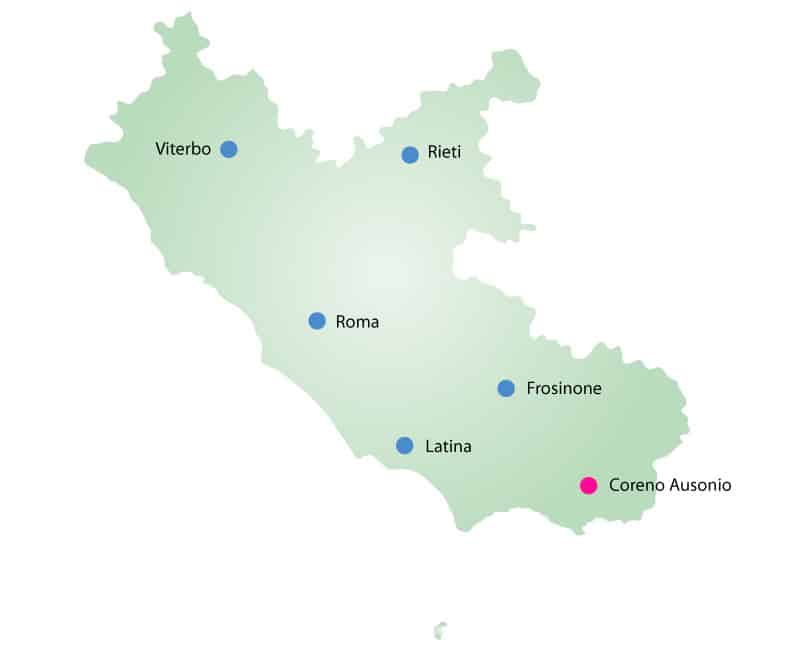
In the province of Frosinone, halfway between the seaside resort of Formia and historic Cassino, on a small rise in the Monti Aurunci, stands this small village, known for its marble quarries used to build the monumental Montecassino Abbey. One of the food specialities of this stone village is the homemade bread, called corenese, from the long peasant tradition, peculiar to this village whose name seems to derive from the Greek expression 'kora oinou' meaning 'land of wine', with obvious references to the cultivation of vines, typical of this area. The preparation of this bread was traditionally carried out in all the families of the village, as is testified by the presence, inside the historic houses, of stone ovens that can still be seen today by those walking through the narrow alleys of the historic centre. For the preparation of bread, stone-milled flour and sourdough are used today, as then. The dough obtained by combining the ingredients undergoes a double leavening process: first in the form of dough and then in the form of the typical loaves that are left to rest wrapped in special cotton cloths. Only at the end of the leavening process are the loaves baked for about an hour and a half over the bricks that characterise the typical ancient, wood-fired ovens, so that they absorb all the aromas of the area as they bake.
The product
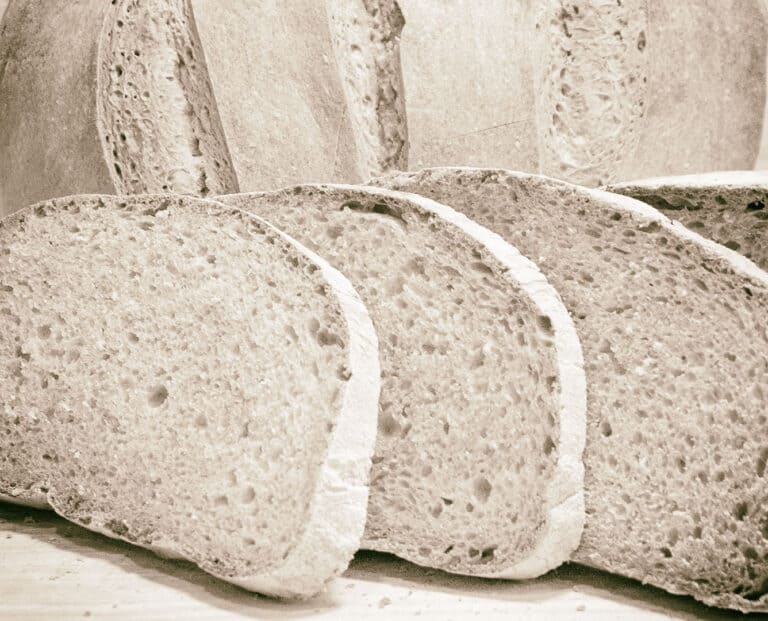
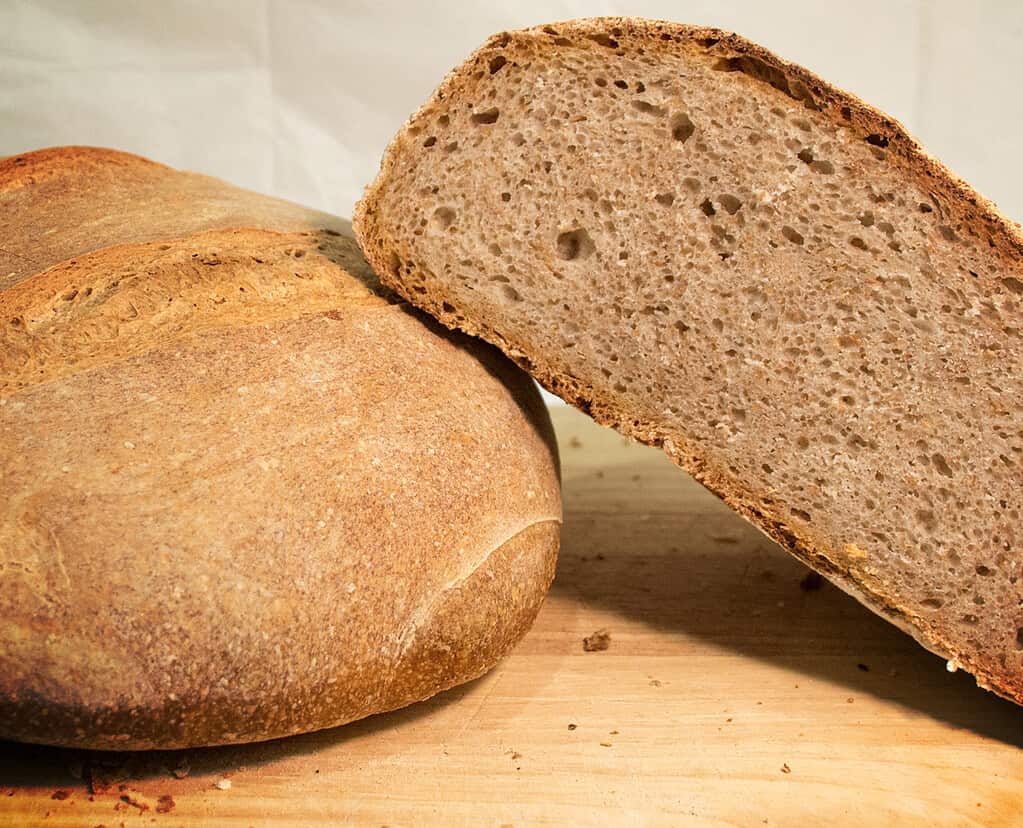
Pane di Coreno Ausonio, characterised by its loaf shape, has a light brown colour with good crumb alveolation. The high olfactory intensity is characterised by pronounced notes of wheat and yeast combined with hints of toast. The taste is harmoniously sweet and salty, with a pleasant sour note due to the yeast. The crust is crispy and the crumb soft, with a medium aromatic persistence.

MARIA TIERI AND HER BAKERY ANNA CORENO
In the historical centre of Coreno Ausonio is the Anna Coreno Bakery, where Maria Tieri passionately carries on the traditions of the peasant bakery art. 'Gliu paschotthio non è per chi non tè renthie,' says Maria decisively, meaning that the Corenese bread (in dialect paschotthio) is only eaten by those who understand its peculiarities. 'I have the presumption to say that we sell not a simple baked product, but a tradition and a sense of belonging to the territory. Because,' Maria continues, 'the tradition of our bread is ancient. In the past, every Corenese family had its own oven, built outside the house so as not to take up too much space and for easier use. Every housewife kneaded and proudly made her own bread, including my grandmother who liked to say that her bread was better than that made by the other housewives of Coreno Ausonio'. In this historic village of 1,500 inhabitants, 40-year-old Maria Tieri decided to open her business with the aim of making bread the protagonist of the table again and becoming the guardian of an ancient tradition. "In my bakery today I produce and sell loaves of bread weighing around two kilograms, I give advice to my customers on how to store it or use it if it becomes stale, to avoid waste and to disseminate the recipes of the past. I am proud of my customers, who often come from neighbouring countries to taste my bread and give me hope for the future of this ancient art".