
34. Strawberry Favetta of Terracina
History
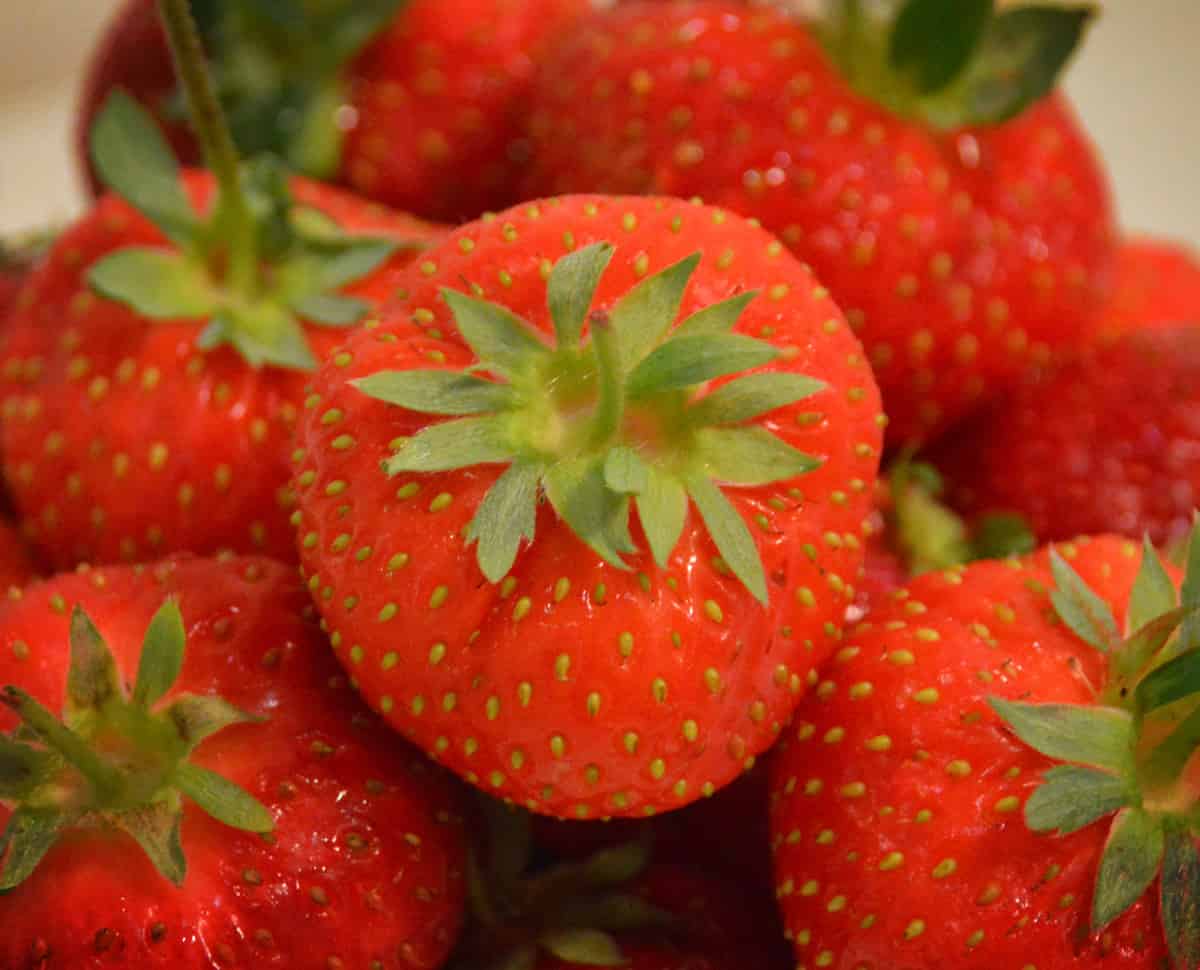
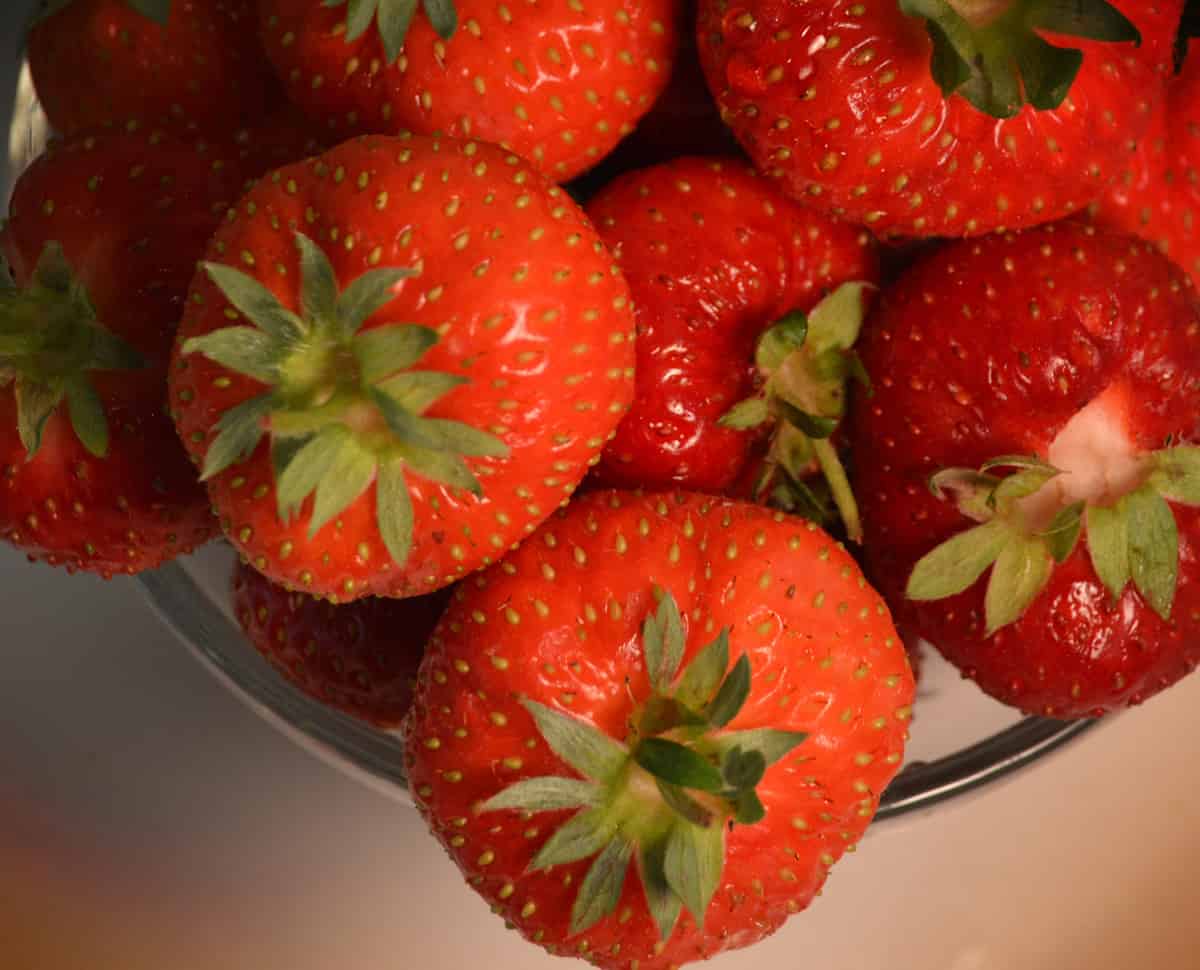
A noble fruit, extolled by Ovid, Pliny and Virgil, it represents a true fruit-growing excellence for the city of Terracina, one of the most famous seaside resorts in Lazio, located as it is on the splendid Gulf of Circeo. The Favetta is a variety of uniform strawberry (it flowers only once a year) that has found the ideal microclimate for its cultivation in the territory of this city, between the Ausoni Mountains and the sea. The introduction of this crop dates back some fifty years when a French seed company proposed to Terracina farmers to plant this French variety, the Favette. The period of greatest production was reached in the two decades between 1960 and 1980, but still today Pontine farmers cultivate it on the land of Terracina and around 100 hectares of surrounding area, personally saving the seed and sending the seedlings to flower. The soil, for both greenhouse and open-field cultivation, is prepared by tilling, basic fertilisation and furrowing. Sowing is done in the seedbed in late summer. In September, the young seedlings are transplanted into the open field, fertilised and irrigated periodically and often covered with a protective film, suitably perforated, thanks to which they enjoy beneficial warmth for growth. Harvesting is done by hand during the cool hours of the day from the end of March until May. The intensely red fruit is characterised by an intermediate size between typical European strawberries and wild strawberries. This speciality can be tasted every year when the festival dedicated to it takes place in the beautiful Pontine village between May and June.
The product
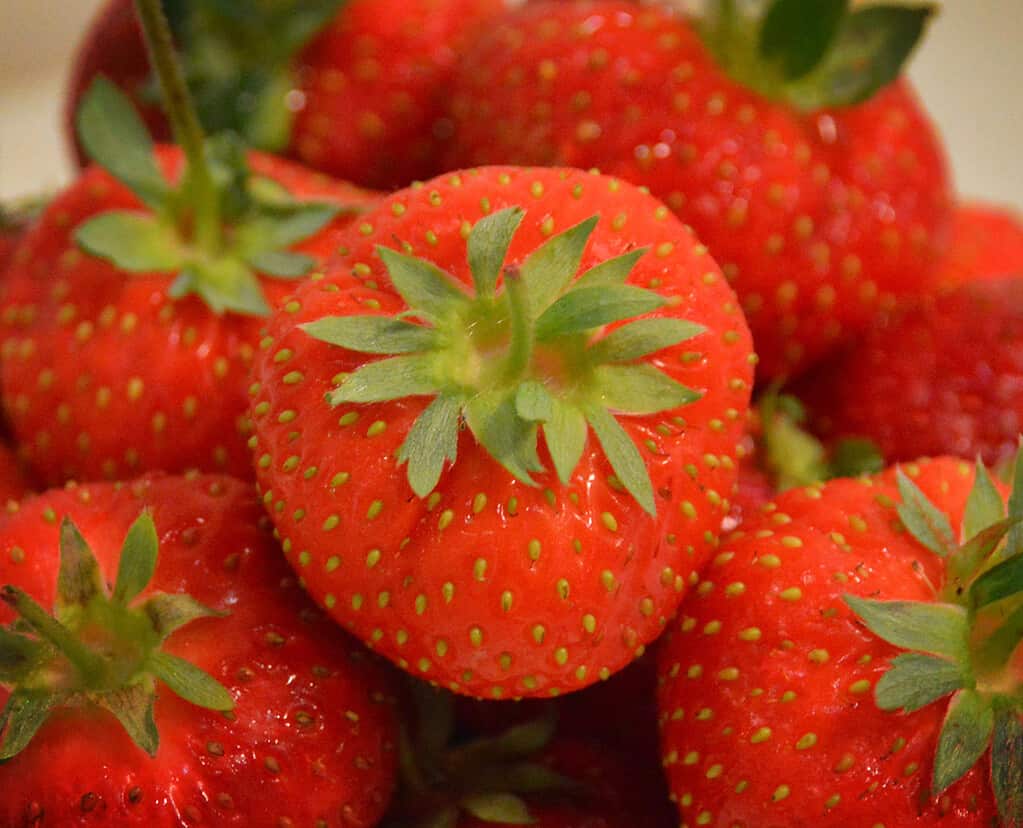
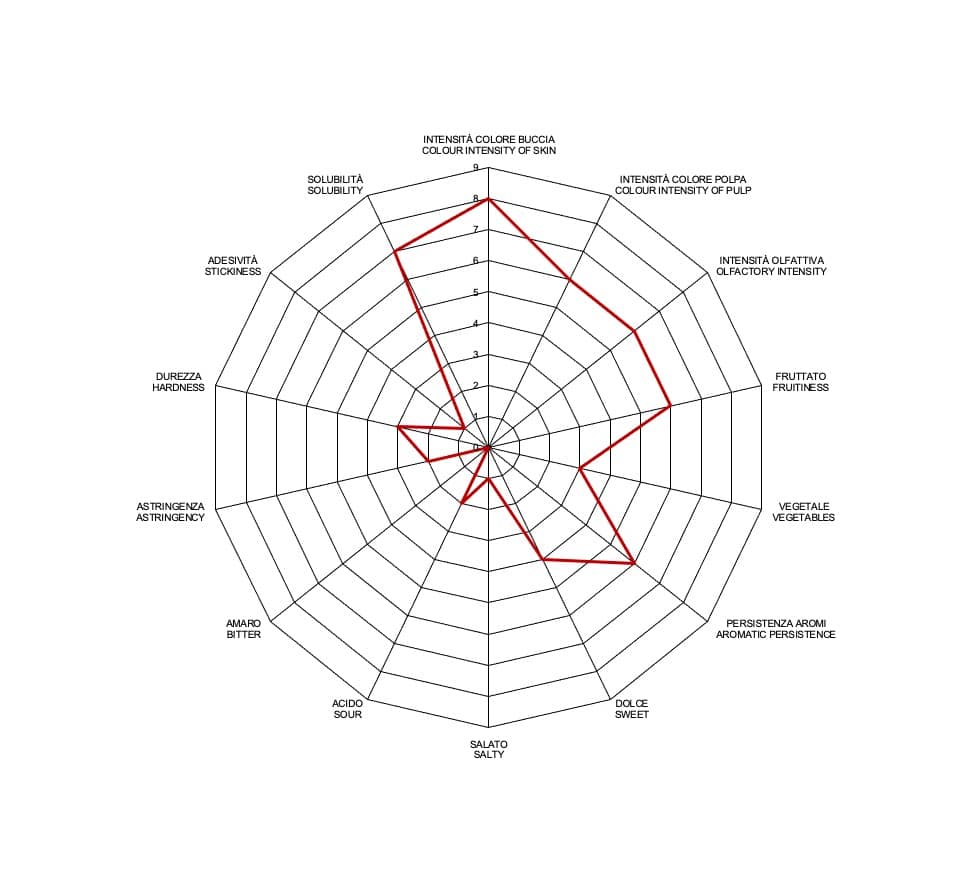
Favetta strawberry has an intense, uniform red colour. The high olfactory intensity is characterised by distinct fruity notes typical of ripe strawberries and vegetal hints. The taste is sweet with a delicate salty and sour note. Good aromatic persistence.
A TRUE PEARL OF LAZIO: BETWEEN SEA AND ARCHAEOLOGY
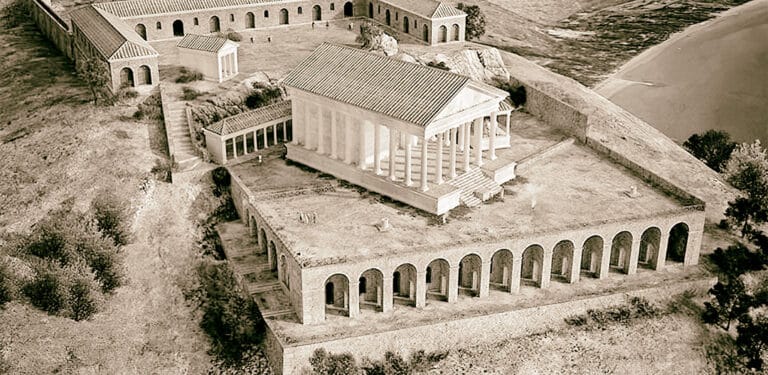
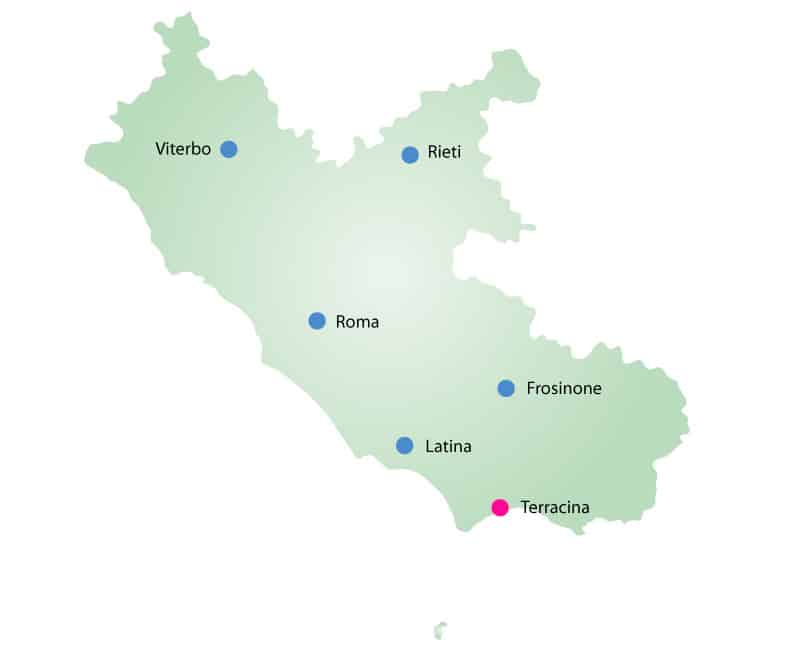
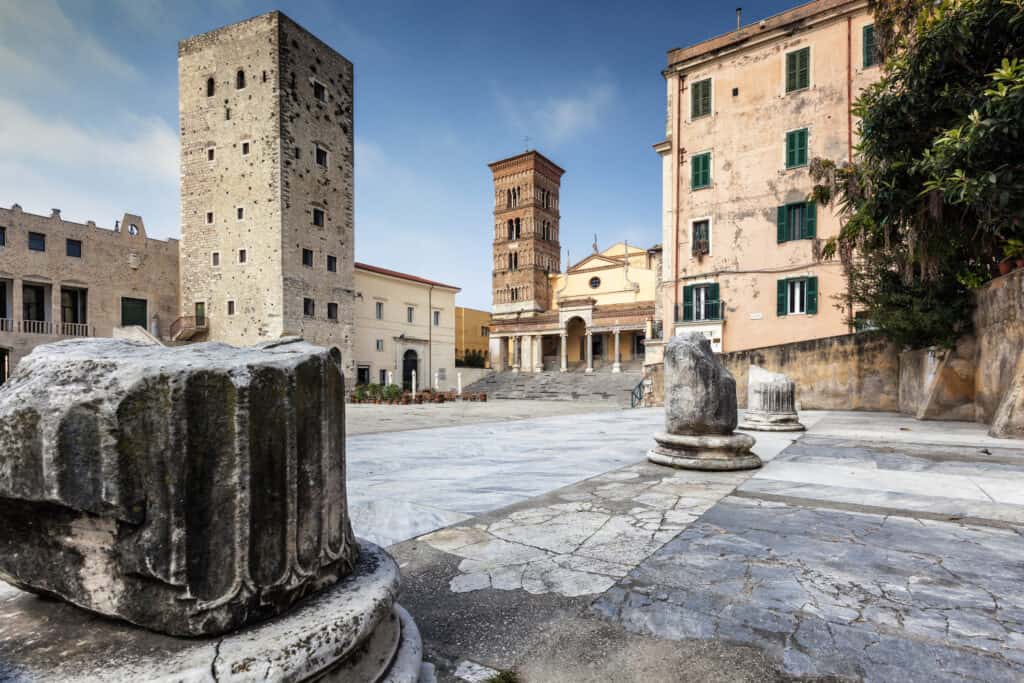
Terracina, in the province of Latina, is the ideal tourist destination for lovers of the sea and archaeology. In fact, the town offers beautiful beaches, crystal-clear waters awarded the blue flag, bathing establishments, and an enchanting harbour and promenade where you can lose yourself among boats, shops, and restaurants. Those who reach the city cannot miss a visit to the historical centre, which spreads out in the upper part of the city and preserves ancient testimonies dating back to Roman domination and the Middle Ages, such as the Cathedral of San Cesareo and the Church of Purgatory. Among the architecture from the Roman era, in addition to part of the paving of the Via Appia, the remains of the Roman theatre and the Aemilian forum, the heart of the urbe of which the paving from the 1st century B.C. and the remains of the Capitolium are still visible. The scenic Piazza del Municipio, which coincides with the Roman forum, offers a breathtaking view of the gulf and the monumental complex of Jupiter Anxur. Located on Monte Sant'Angelo, which dominates the city from a height of 227 metres, the evocative complex is inspired by Hellenistic scenographic architecture and was built around the 1st century B.C. with three terraces: the highest terrace, with a clear military and defensive function, the middle part with a purely religious function, as demonstrated by the remains of the Temple of Jupiter, and a lower part, consisting of an imposing basement with twelve mighty arches resting on the rock of the mountain.