
30. Ciammella a Cancellu di Mentana
History
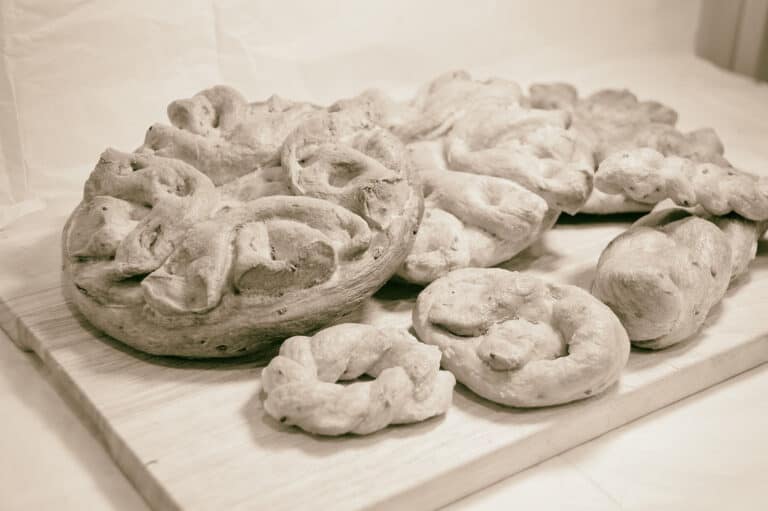
The Ciammella a Cancellu is a poor sweet from Mentana that can probably be linked to the ancient ritual festive breads of the area. The earliest historical evidence dates back to the mid-1700s when a group of peasants decided to found the Confraternity of Sant'Antonio Abate di Mentana and to institute a feast dedicated to the patron saint of animals. In the ancient statutes of the Confraternity, one of the obligations of the Confraternity members attending the feast is to bring 'as per tradition, two donuts per gate and a large bottle of wine'.
The consumption of this doughnut is also linked to another solemn feast, that of the Epiphany. This is attested to by a popular song that used to be sung by a group of male voices that, on 6 January, used to cheer the town accompanied by an accordion (li zuffiatelli), then going from house to house to ask, with these words, the owners for donations of food. 'if you make the matches, bring the most beautiful ones, if you make the biscuits, don't understand the finest ones...'.
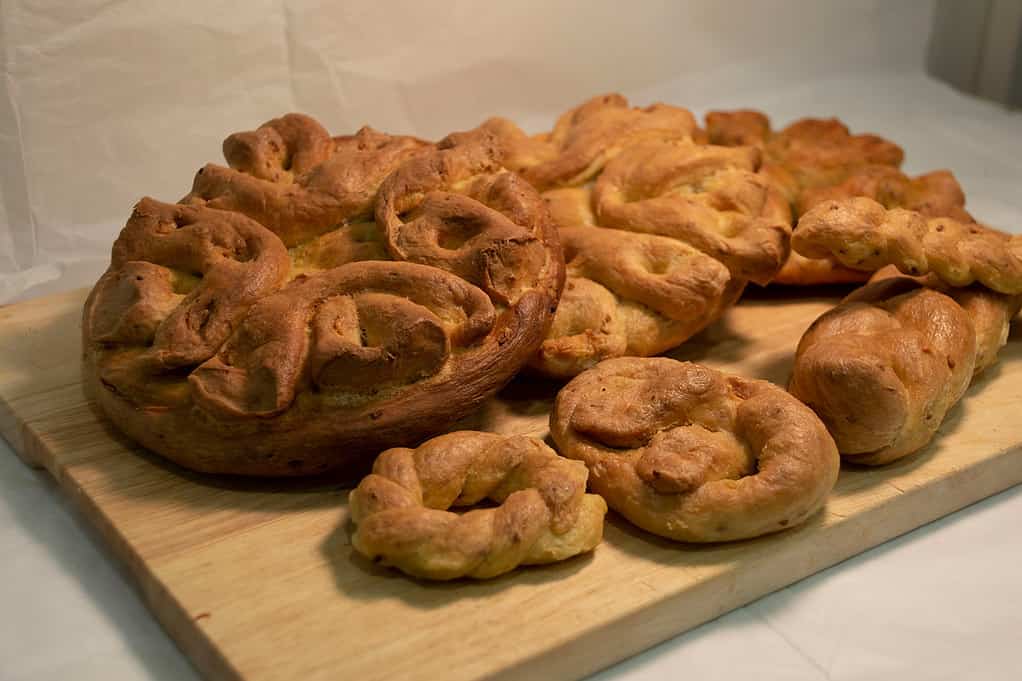
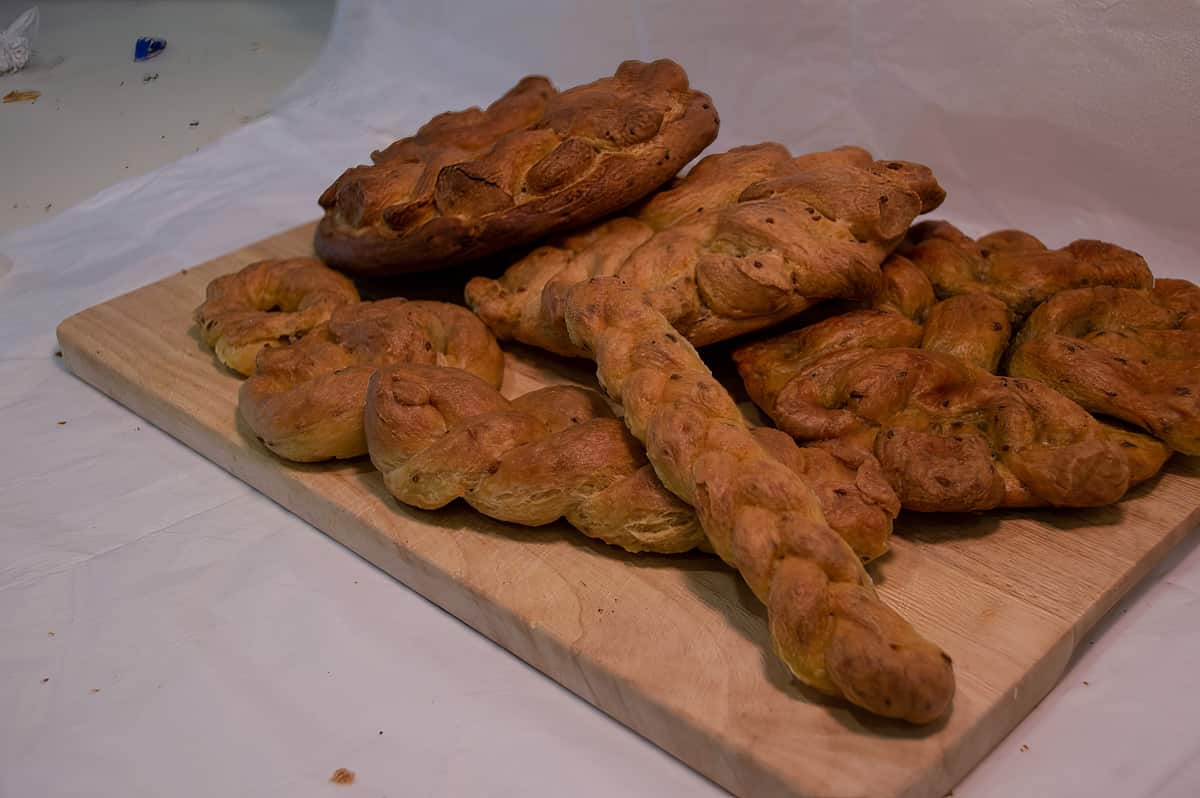
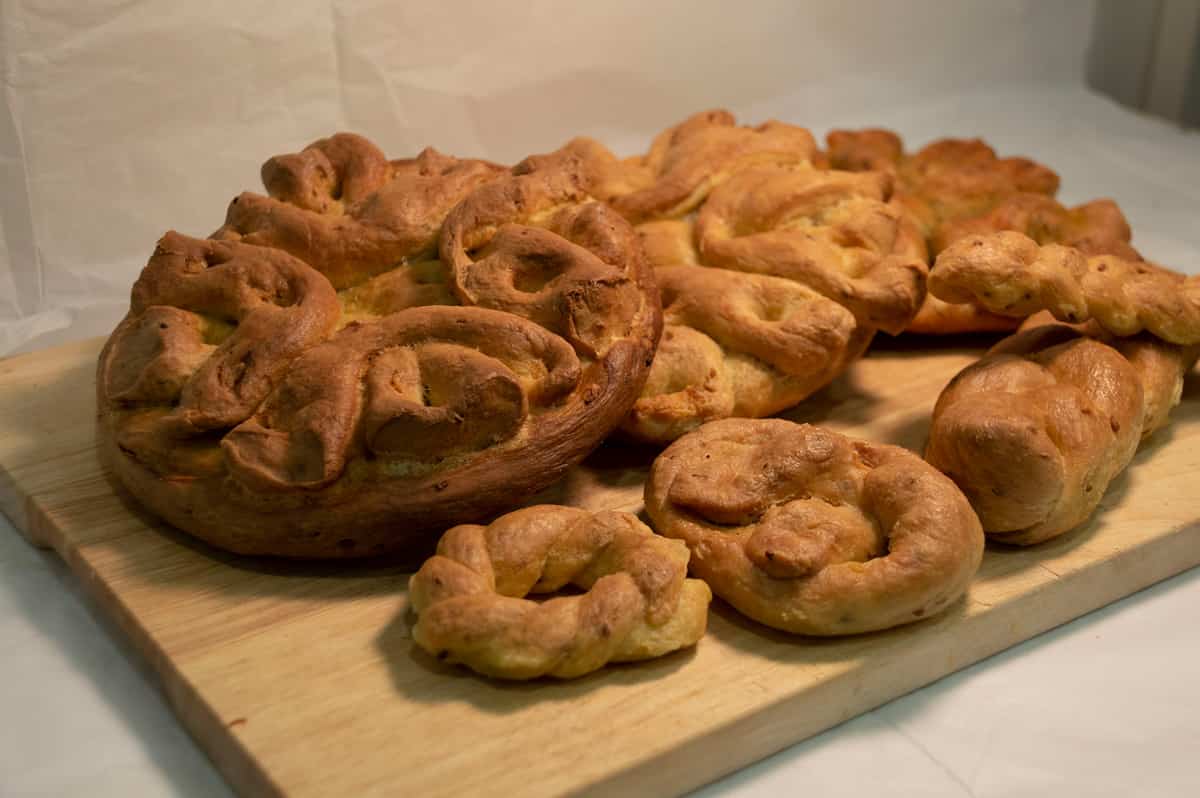
The ciammella, which despite its name does not have a circular shape, but a rosette shape reminiscent of the decoration of the iron gates common in the area, requires a two-day preparation. After a homogenous dough is obtained, processing begins to obtain doughnuts of about 12-15 centimetres in diameter. Then, on each doughnut, first two pieces of dough are placed to form a sort of cross, then four sections of dough folded in a half-moon shape. The resulting shapes are boiled in salted water, dried and baked in the oven.
The product
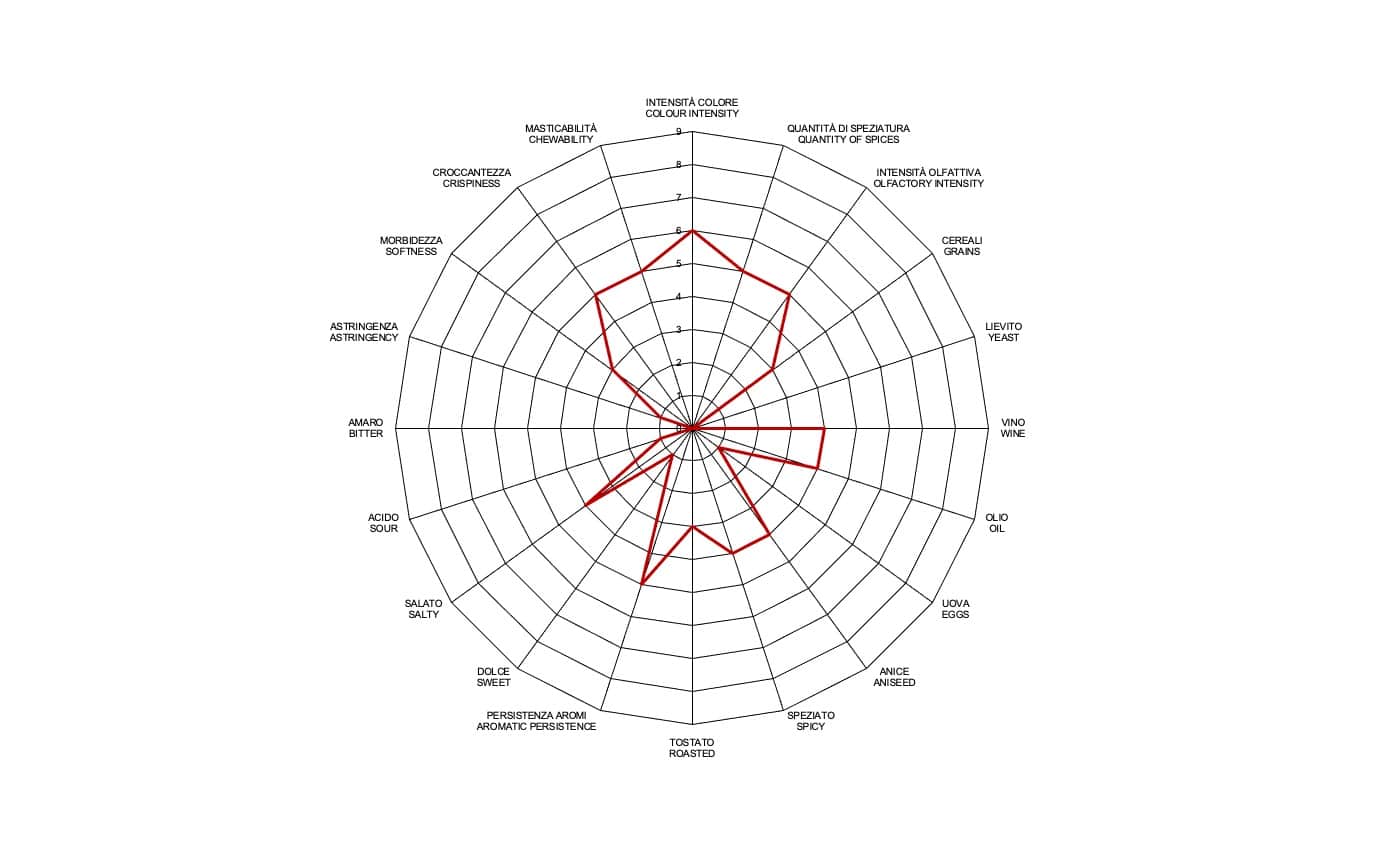
Ciammella a Cancellu has a uniform colour ranging from light brown to ochre. Its aroma is characterised by pronounced notes of flour, oil and spicy notes of aniseed, combined with hints of egg and wine. The taste is harmoniously salty, with a slight sweet and sour note. The texture is quite crisp with a medium aromatic persistence.
A CANCELLU D'AMORE MATCH
The testimonies of elderly inhabitants of Mentana report the ancient custom of offering these doughnuts on the occasion of their wedding celebrations. In particular, it seems that it was common, until a few years ago, for the bride-to-be to prepare a doughnut with her fiancé's name on it, to give to him - as if to seal the union - on her wedding day.
This is the story of Mrs. Donata from Mentana, who remembers her gift of love to her husband with a nostalgic smile: 'I, too, prepared, a long time ago, the cancellu donut for my groom, trying to put infinite care and attention into every step. But at the moment of composing his name, I realised that the rolls of dough I had prepared were too many. My fiancé's name was short, what could we do? It wasn't his fault.... So after composing my groom's name I was left with the doubt of what to do with the leftover dough. I had planned and carried out that preparation with so much respect for tradition, almost as if I had to perform a sacred rite, that I decided I could not use it for something else, like ordinary biscuits, let alone throw it away. So I decided to eat it, raw! I wouldn't do it again,' she says resolutely. And then with a smile she hastens to add: 'tasting raw pasta, of course! Even today in Mentana, at weddings, it is customary to give and taste the doughnut, which thus continues to evoke the symbol of a bond and participation in a festive moment.