

19. Salame Cotto di Nepi
History
The tradition of cooked salami is typical of the entire Viterbo area, but in the town of Nepi the preparation of this salami differs from the rest of Tuscia, making it a particularly appreciated and sought-after product. The first to document the existence of 'salame cotto' was Apicius, a famous Roman cook, who, in his famous recipe book 'De Re Coquinaria' from the 1st century AD, described how this cured meat was already present on the tables of Roman patricians from the imperial era.
Today, the preparation of Nepesina is carried out by a few pork butchers who continue the local production, which, although it can traditionally be done all year round, is carried out from April to November when the warmer temperatures favour the correct evolution of the product. The preparation process requires the sausage to be made from the meat of pigs bred exclusively in Italy. Specifically, the lean shoulder meat is minced, mixed with pork fat cut with a knife, then seasoned with salt, pepper and flavoured with wine and garlic. The meat is then stuffed into the natural gut, which is given its characteristic horseshoe shape with a knot in the centre, dividing the sausage into two salamis. This is followed by smoking for one night, in a cellar or near a fireplace, and boiling for about three hours. Since the sausage does not keep long, the cooked salami is sold, strictly whole, as soon as it has cooled.

The product
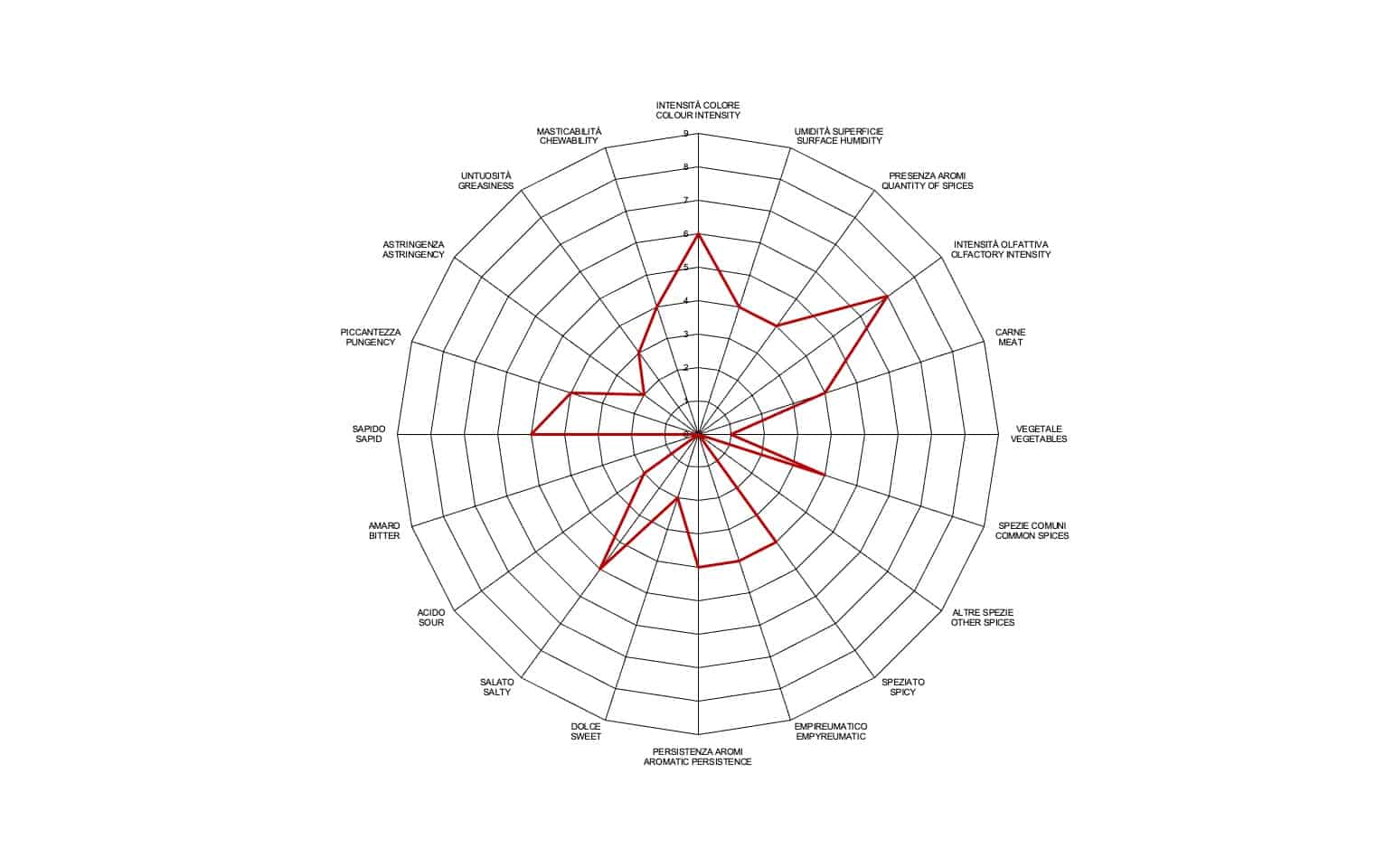
Salame cotto di Nepi, with its characteristic horseshoe shape, has a uniform red-pink colour of the lean meat and white-pink of the fat, more or less intense depending on the degree of smoking. The high olfactory intensity is characterised by pronounced notes of cooked meat, garlic and pepper combined with hints of wine and smoked meat. The taste is harmoniously salty and savoury, with a slight sweet and sour note. Good chewiness and aromatic persistence.
THE AQUEDUCT OF NEPI
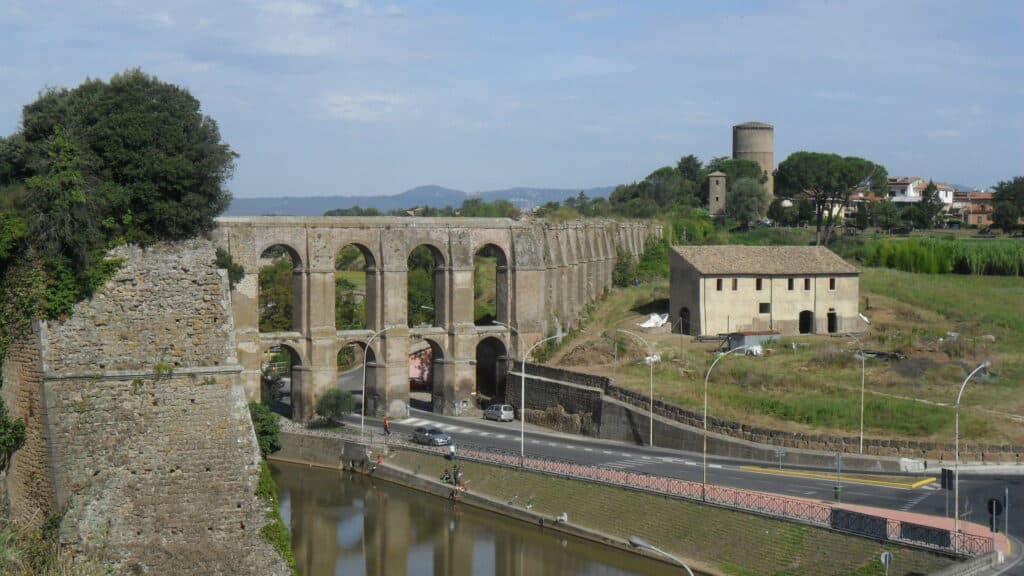
The entrance to the town of Nepi is marked by the bulk of an imposing aqueduct, built with a system of large rows of arches in two rows, which rises 285 metres to rest against the Farnese walls. Although its appearance recalls an ancient era, the aqueduct was designed around the mid-1500s and not built until 1700. The intention was naturally to bring water to the town of Nepi. Most of the route of the aqueduct ran underground, but near the town walls the difference in height to be overcome was very large. To find a solution, a team of architects was called in, including Giacomo Barozzi, known as Vignola, who designed the engineering work. However, the work was only completed in 1727 by architect Filippo Barigioni, at the behest of Cardinal Giuseppe Renato Imperiali. The beauty of the work has attracted the interest of various artists over the centuries. In 1828, during his trip to Italy, the English painter William Turner immortalised the aqueduct's arches in his sketches. The maestro Mario Monicelli made it the backdrop for the first scenes of his masterpiece L'armata Brancaleone and the aqueduct itself appears in some scenes of the film Per grazia ricevuta with Nino Manfredi, filmed in 1971. Still today, the perfectly functioning structure feeds the monumental city fountains and is admired by modern visitors.
