
16. Prosciutto di Bassiano
History
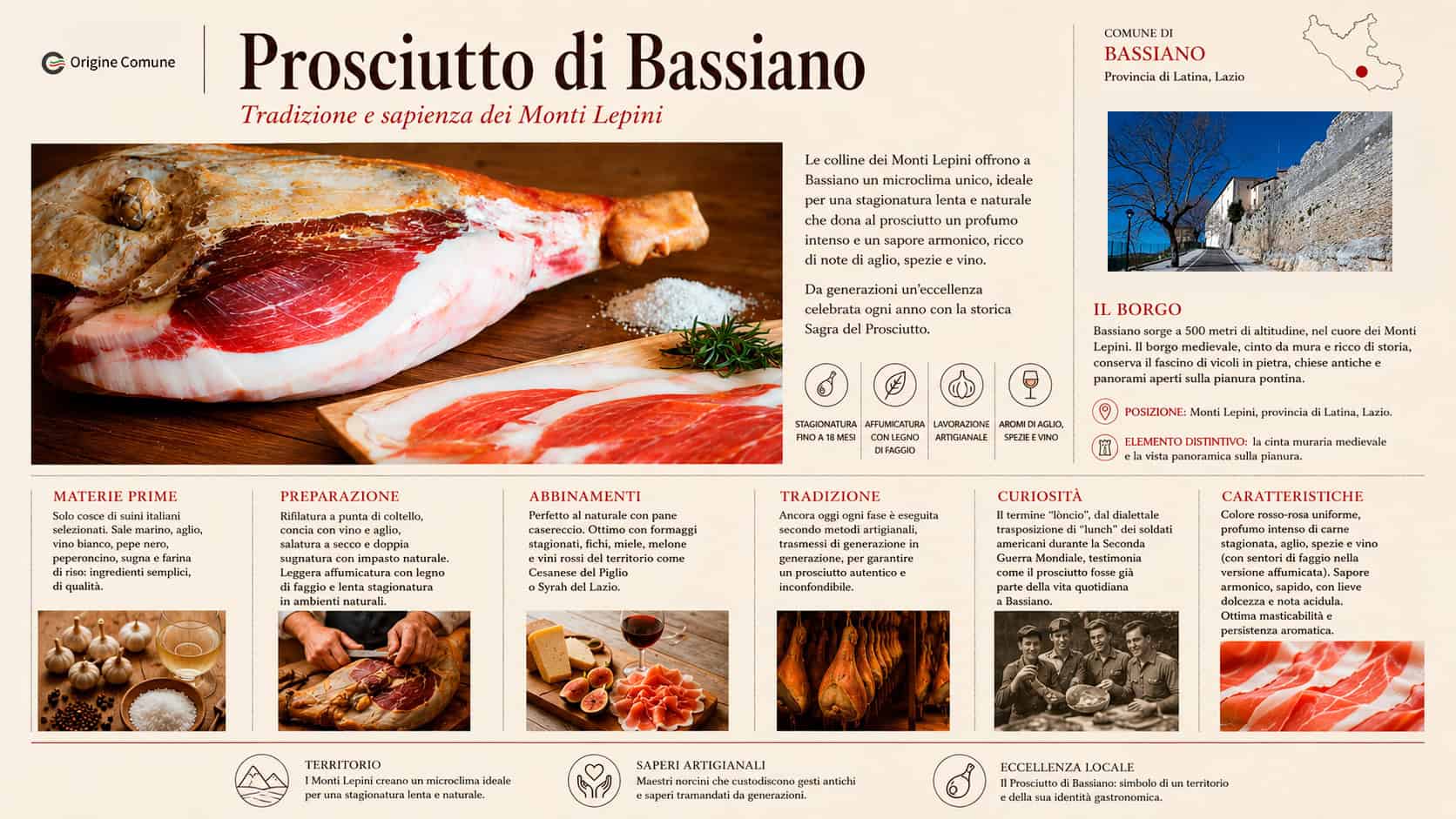
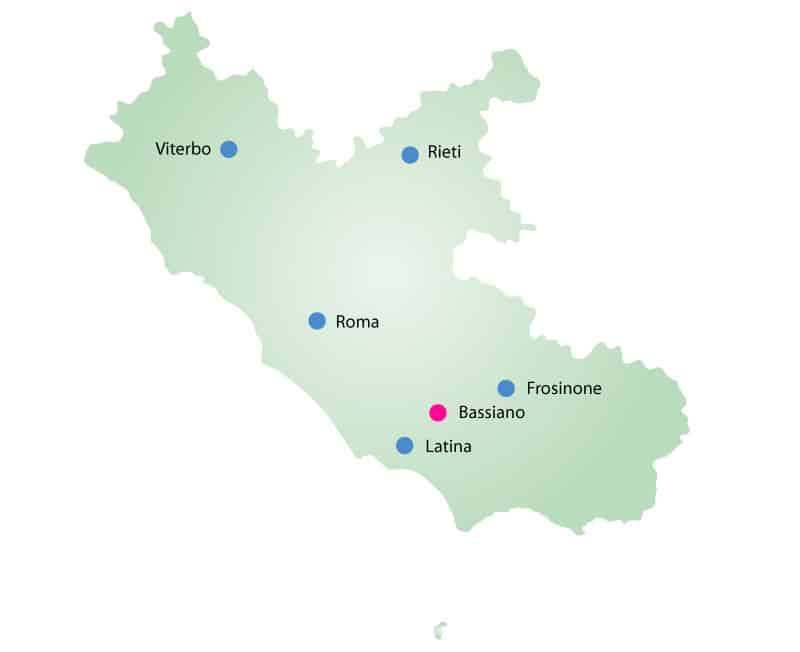
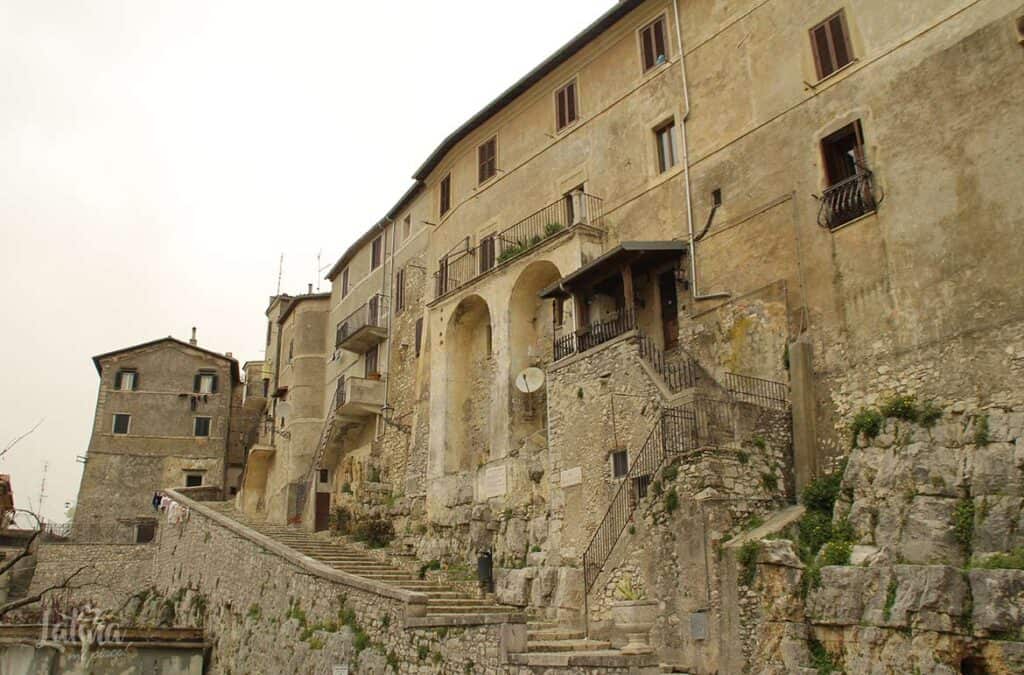
The hills on which Bassiano stands, in the Lepini Mountains, are the ideal setting for the curing of this prosciutto. Indeed, there are numerous soil and climate factors that characterise its production: the right level of humidity needed to ensure the product is cured to perfection, the altitude, and the presence of the mountains, which shield the village from the sirocco and tramontana winds.
Traditional production begins with a careful selection of pigs, sourced exclusively from Italian farms. The legs are first trimmed with a knife, then marinated in a traditional sauce made from white wine and garlic. This is followed by “dry” salting, during which the hams are seasoned by hand. The hams are then subjected to a double coating of lard, which seals the exposed flesh with a mixture of lard, salt, chilli and rice flour. This is followed by light smoking over beech wood and slow curing.
Many generations in Bassiano have grown up eating what is still known today as “lòncio”, a ham sandwich. The use of this term – a dialectal adaptation of the English word ‘lunch’, used by American soldiers in the area during the Second World War – bears witness to the fact that ham production has existed here since that time. For the past fifty years, on the last Sunday in July, a historic festival has celebrated its excellence.
The product
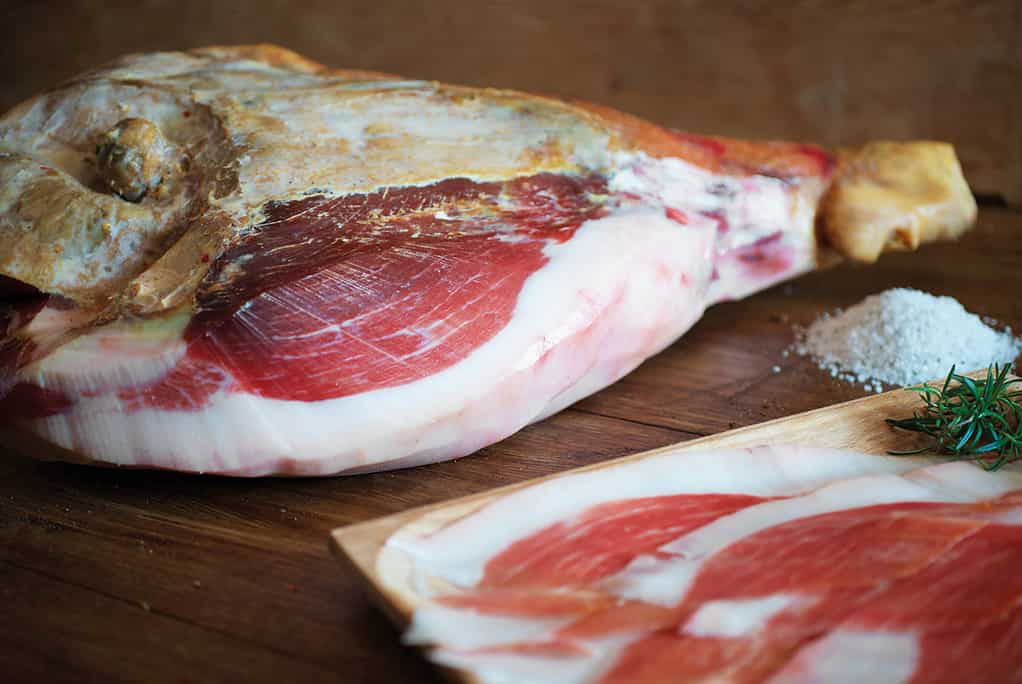
Prosciutto di Bassiano, which is characterised by the trimming of the rind down to the stem and the curing process lasting up to 18 months, has a uniform red-pink colour of the lean meat and white-pink of the fat with good marbling. The high olfactory intensity is characterised by pronounced notes of seasoned meat, garlic and spices combined with hints of wine and, for the smoked version, of beech. On the palate, it is harmoniously salty and savoury, with a discrete sweet note and a slight sour note. Good chewiness and aromatic persistence.
THE SHRINE OF THE CRUCIFIX OF BASSIANO
A short distance from the medieval village of Bassiano, nestled amongst the greenery of the Lepini Mountains, stands the Sanctuary of the Crucifix, a very ancient complex steeped in both devotion and mystery.
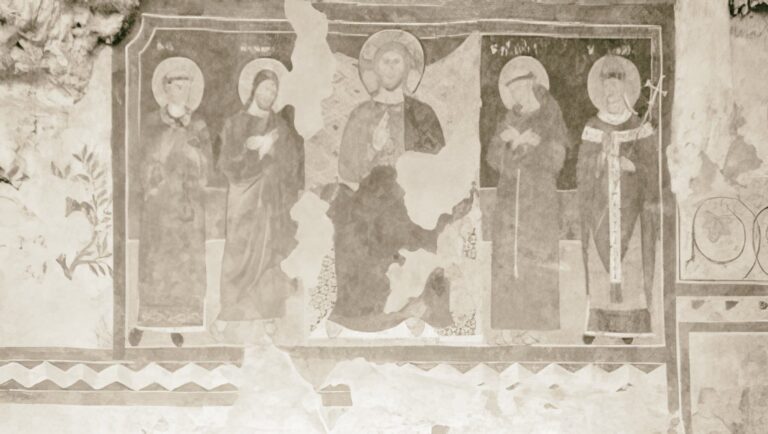
According to tradition, the hermitage was built in medieval times on the site of the cave that provided refuge to the Knights Templar who fled, in 1300, from persecution by the Abbey of Valvisciolo. Later, the hermitage is said to have housed a confraternity of Franciscan friars. Regardless of the various historical or legendary theories, the Sanctuary preserves some fine rock-cut frescoes that bear witness to the importance of this place of worship. Indeed, the cave contains splendid wall paintings, dating from the 14th and 15th centuries, which have recently been restored. Particularly noteworthy for their colours and brushwork are the Enthroned Madonna and Child, Mary Magdalene, the Crucifixion and the Blessing Christ with Four Saints.
The circular chapel, meanwhile, houses a famous wooden crucifix, carved in 1673 by the Bassiano friar Vincenzo Pietrosanti, after whom the sanctuary is named. Legend has it that the friar, who is said to have carved more than seven crucifixes during his lifetime, used to work only on Fridays, after a long fast and after flagellating himself. The drama of this crucifix is vivid and stirs deep emotion, so much so that tradition attributes the carving of Christ’s face to a divine hand.