


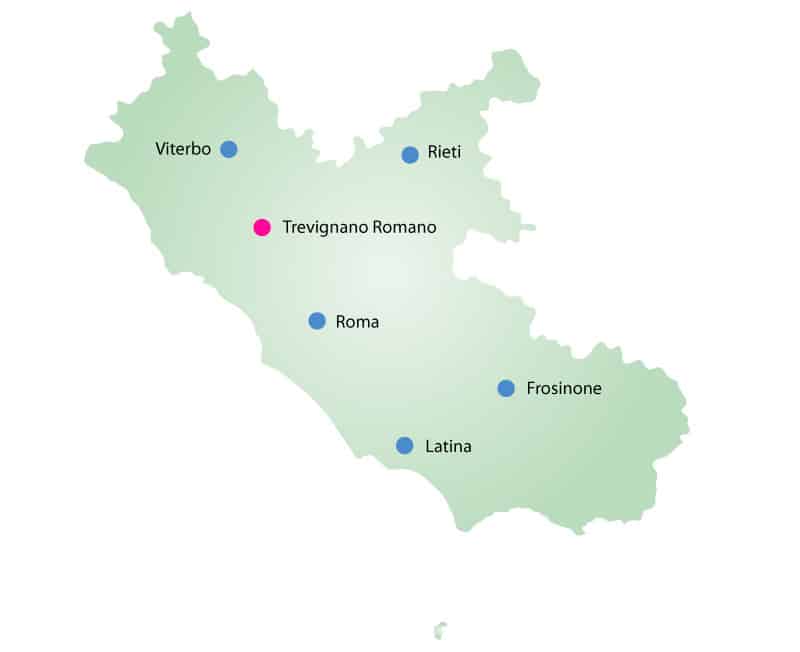
15. Marinated Fish of Trevignano Romano
History
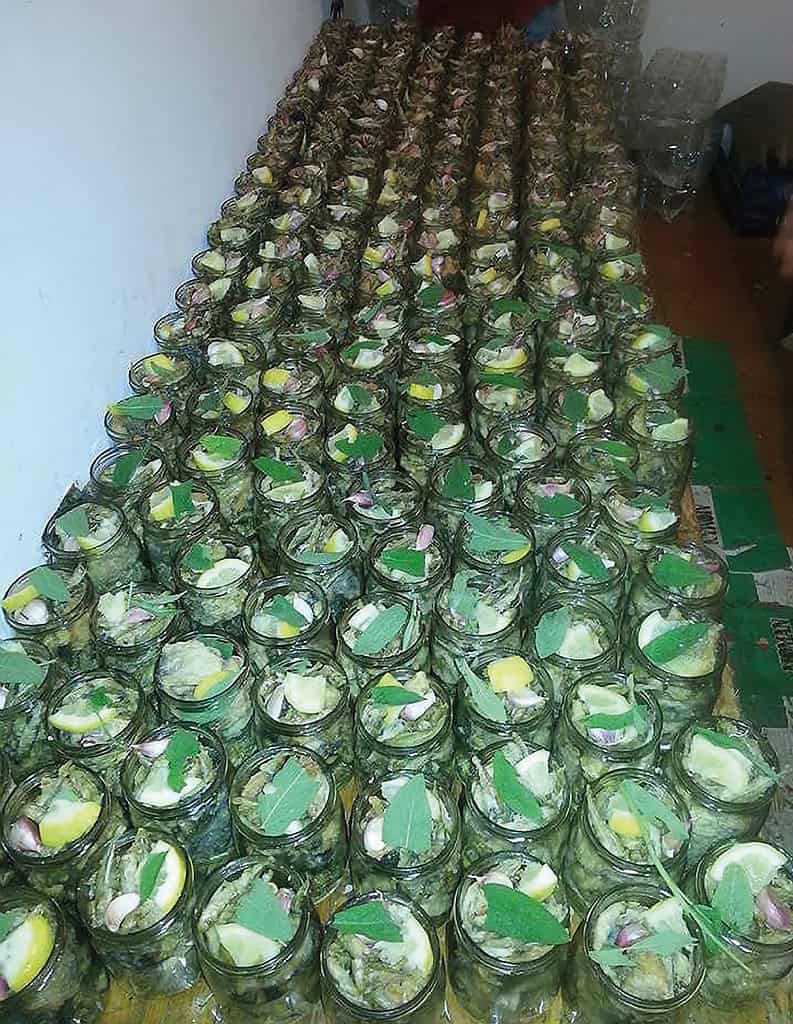
The tradition of preparing marinated fish has characterised the area of Trevignano Romano since ancient times. According to legend, it was the patron saint of the beautiful lakeside town, St Bernardino of Siena, who calmed the population from the risk of Saracen invasion and advised all fishing families to leave their nets in the water and return home. It is said that the church dedicated to the saint was built in 1452 on the very spot where he met the people of Treviso. The Saracen attack was eventually never carried out, but the fishermen's nets were miraculously found full of fish. From this unexpected and abundant catch, the need arose to preserve all that lake product, which gave rise to the tasty recipe 'de lo pesce marinato' (marinated fish). The preparation involves cleaning the fish, which are cut into pieces, salted, coated in flour and fried. The fish thus prepared is then preserved in glass jars, taking care to add garlic, lemon, sage, rosemary and coarse salt. The next step, which makes the dish characteristic, is the addition to the jars of boiling vinegar, previously cooked with water.
This dish can commonly be enjoyed in May, when the people of Treviso organise the festival to honour the town's patron saint. The popular festival helps to spread knowledge of this tasty dish made with lake fish, through three days of tastings, rowing boat races, sports and games, and musical performances.
The product
The Marinated Fish consists of a selection of lake fish of different sizes (pike, tench
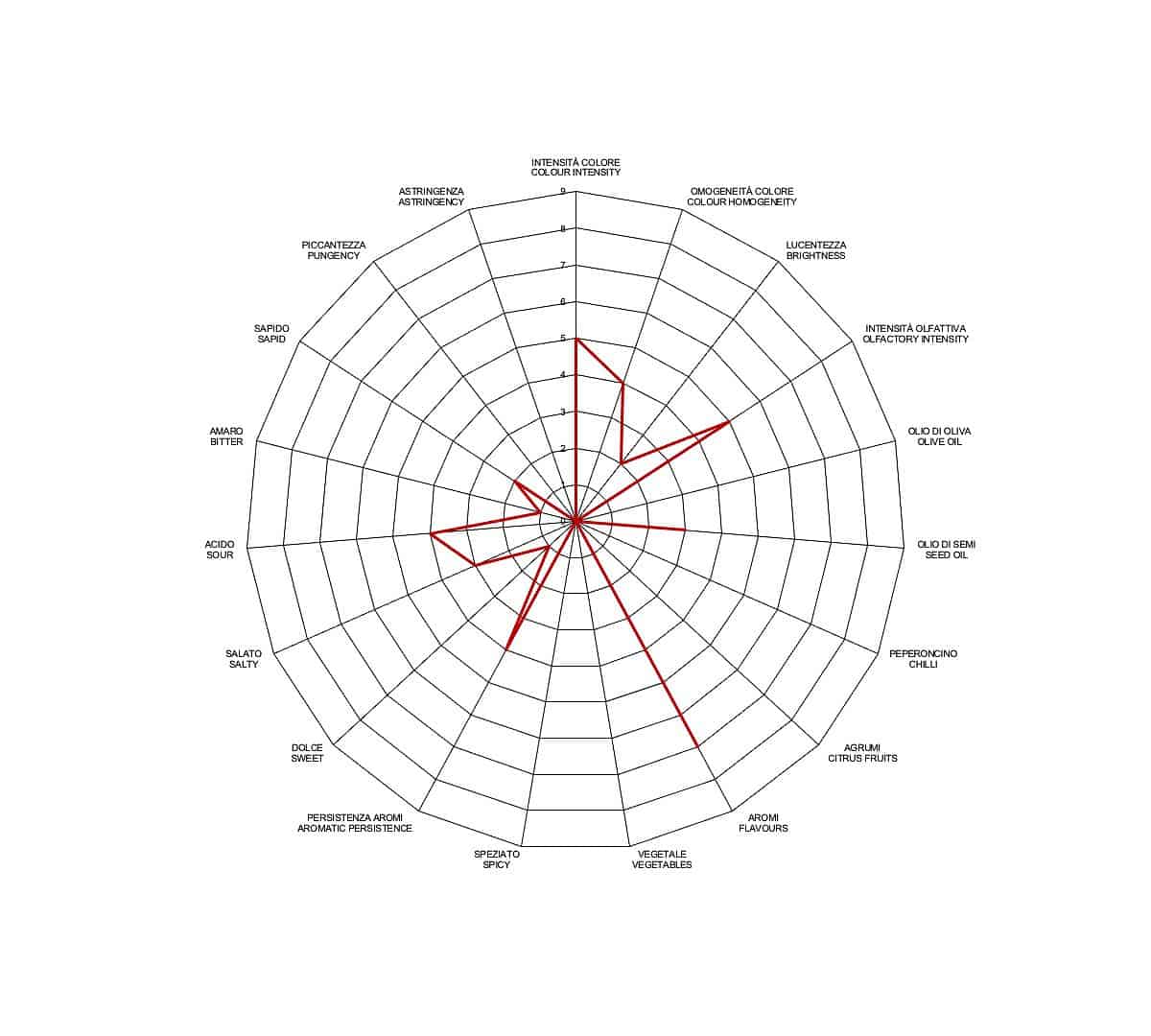
perch, milkfish and whitefish). The colour varies from beige to golden, depending on the fish. The nose is characterised by pronounced notes of fish, frying oil, garlic and vinegar. The taste is moderately salty, savoury and acidic, with a slight sweet and bitter note. Good aromatic persistence.
TREVIGNANO ROMANO AND THE ANCIENT LACUS SABATINUS
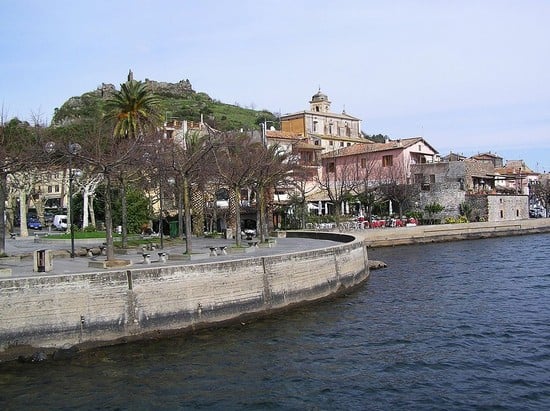
The town of Trevignano Romano, probably built on the site of the Etruscan city of Sabatia, still retains its typically medieval appearance. Access to the village is through the gate located next to the Clock Tower; inside stands the bulk of the beautiful 16th-century Church of the Assumption and the Church of Santa Caterina, built on the remains of a Roman building, of which some arches remain. The village, in addition to an Antiquarium that houses some finds from Etruscan tombs in the surrounding area, is characterised by the typical stone-paved alleys that climb up to the remains of the Rocca (or Orsini Castle), a fortress built in 1200 by Pope Innocent III and subsequently dismantled.
Although the Rocca preserves very few remains, it is certainly worth a visit as it offers one of the most beautiful and evocative views of Lake Bracciano, which extends over more than fifty square kilometres within a volcanic basin and still has very pure waters. The Romans called it Lacus Sabatinus and Emperor Trajan exploited its waters to supply some areas of Rome, including the right bank of the Tiber (Trastevere). The Trajan-era aqueduct was then reactivated in the early 1600s at the behest of Pope Paul V, who gave his name to the restored pipeline. On its banks, besides Trevignano Romano, the towns of Bracciano and Anguillara Sabazia gracefully overlook it.
