
12. Tonda Gentile dei Colli Prenestini hazelnut
History
Hazelnut cultivation is widely and historically widespread throughout the Prenestino area, which due to its position, physical characteristics of the soil and climatic conditions is particularly suited to the production of this fruit.
The Labico area has always been dedicated to hazelnut production. The Statute of Lugnano (ancient name of the village) already mentioned hazelnut cultivation and the presence of a Nocchieto della Corte in the 17th century.
The nearby town of Palestrina itself must have been devoted to hazelnut cultivation in the past. Here, the origins of the crop are documented from the 1960s when, at the instigation of the Giordani farm, most of the population began planting hazelnut groves.
It seems, however, that most hazelnut trees were planted in the Prenestini Hills from 1950 onwards by small and large landowners, who eventually established a cooperative in 1977. Starting in the 1980s, the local producers began to focus on improving production and quality, even dedicating themselves to manual harvesting of the product. Today, the cultivation, harvesting and processing phases of this local product are mainly carried out by mechanical means, without however affecting its excellent organoleptic qualities. The most widely cultivated varieties are the Tonda Gentile Romana and the Nocchione.
After harvesting, the product is cleaned and sold in the shell, shelled or roasted. It can be eaten as it is or used as the basis of local confectionery tradition, such as for tozzetti and pangiallo.
The product
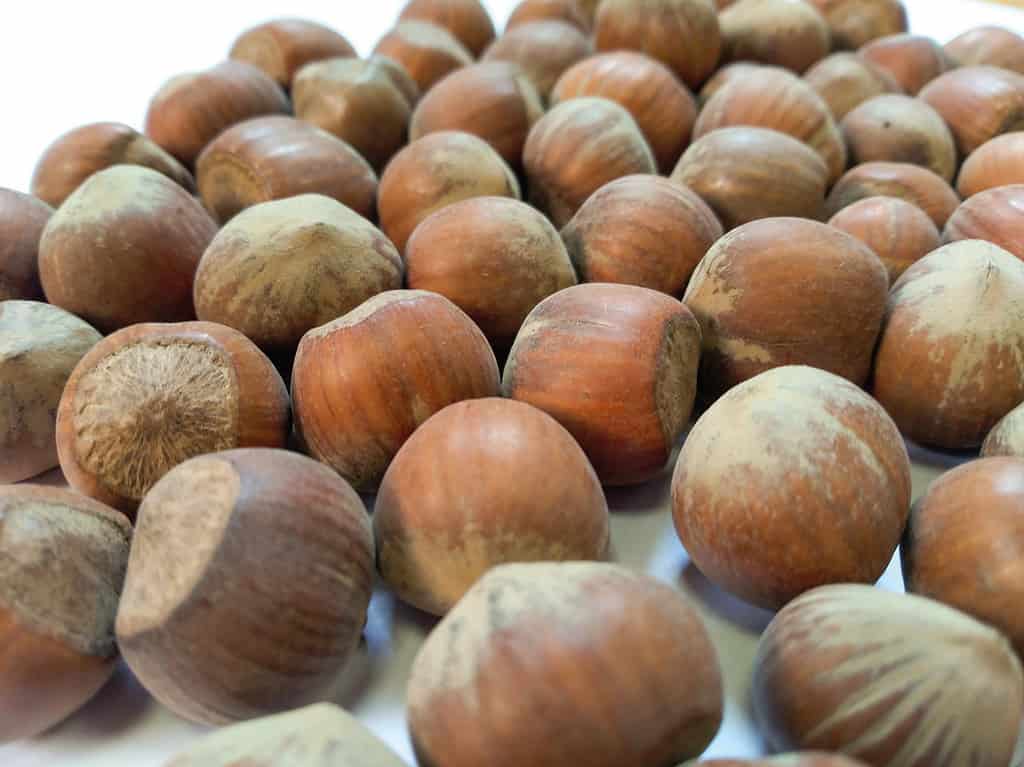
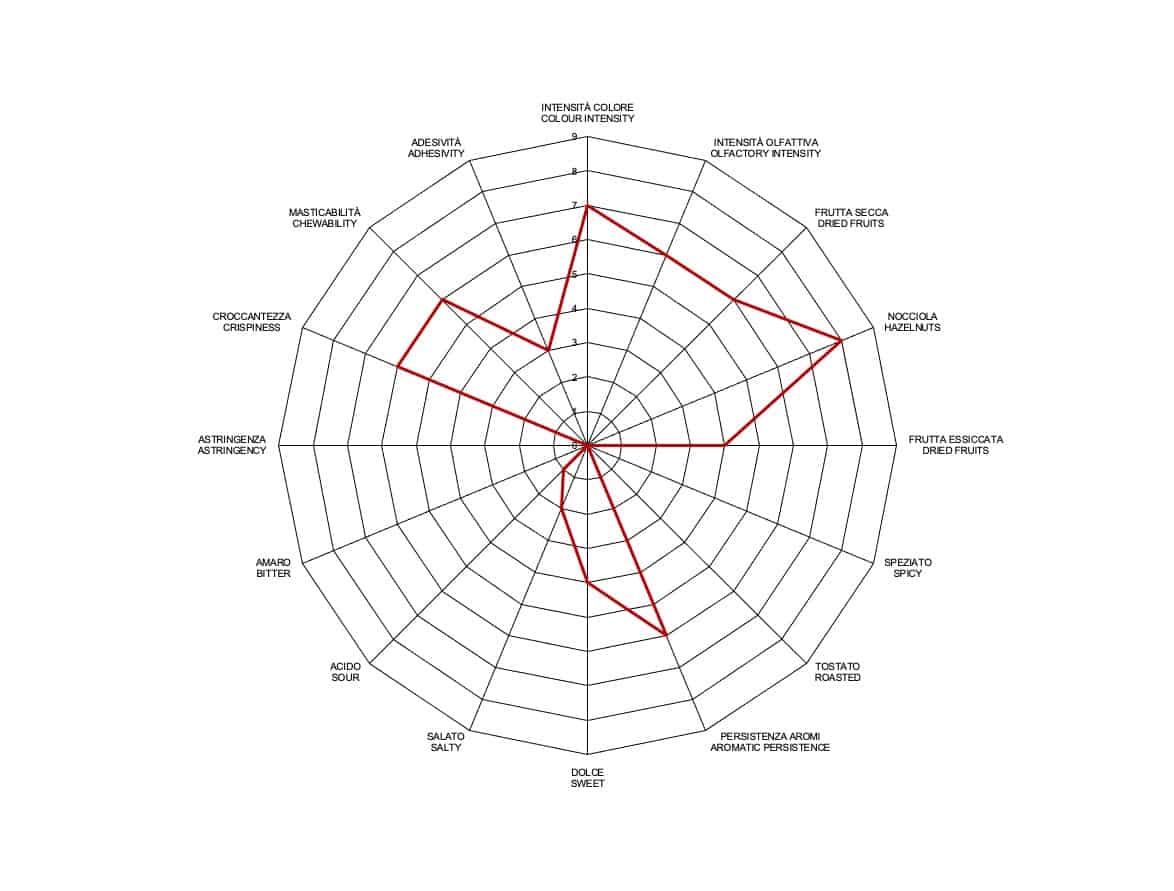
The Nocciola Tonda Gentile Romana dei Colli Prenestini, characterised by its spheroid shape with a slightly pointed apex, has a hazelnut-brown colour and a strong hazelnut aroma. The taste is sweet with a slightly salty note. Good crunchiness, chewiness and aromatic persistence.
ANCIENT LABICO
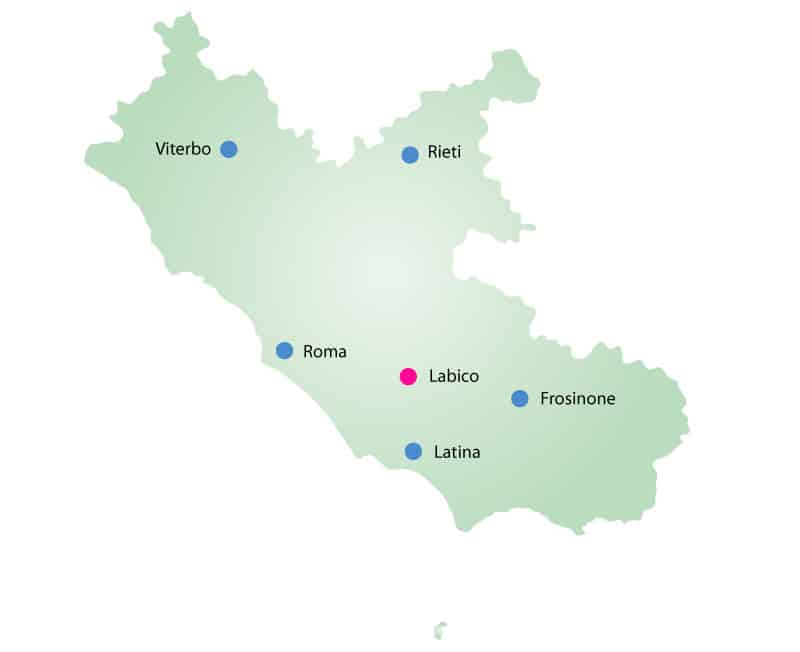
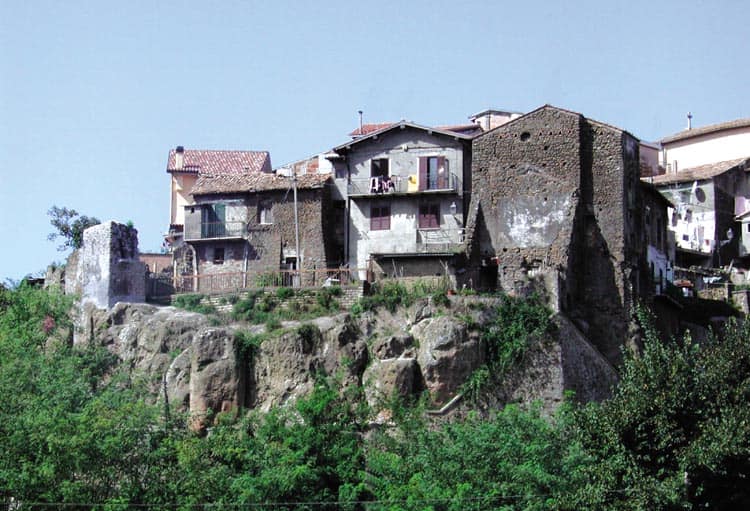
In a picturesque position, between the Aniene Valley and the Albani Hills, lies the village of Labico, which takes its name from the homonymous Via Labicana or the ancient Labicum, a Roman city to be located between Colonna and Montecompatri.
The very ancient origins of the village are documented by remains from the Volscian and Roman eras, while the first documentary attestation dates back to the 8th century, when it was mentioned as Fundus Longoienianum, probably a toponym to indicate the ownership of a certain Longus. Over the centuries it was first owned by the Church and later by various powerful local families (as attested by the presence of beautiful palaces) such as the Counts Tuscolani, the Counts of Segni, the Sforza Santafiora, the Barberini and finally the Pamphili.
Strolling along the alleys of the old town centre, it is possible to admire what remains of two towers of the Lugnano Castle, the Church of Sant'Andrea Apostolo built in the 17th century, the Palazzo Comunale (Town Hall), which houses a fine Roman tombstone in the council chamber, as well as the Palazzo Giuliani, built on the remains of the post station, which was built in the 16th century for changing horses on the Via Casilina.
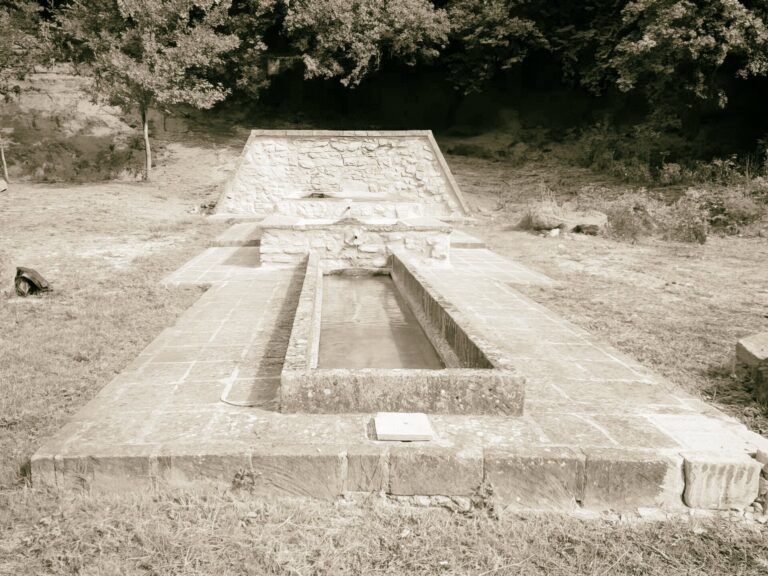
Just outside the town, along the Canepine valley, one can admire a complex of fountains and springs fed by water still coming from tunnels dating back to Roman times; also dating back to Roman times are the remains of the 'ad pictas' stadium and a cistern, locally known as the 'Grotta Mammea'.