09. Hay of Canepina
History
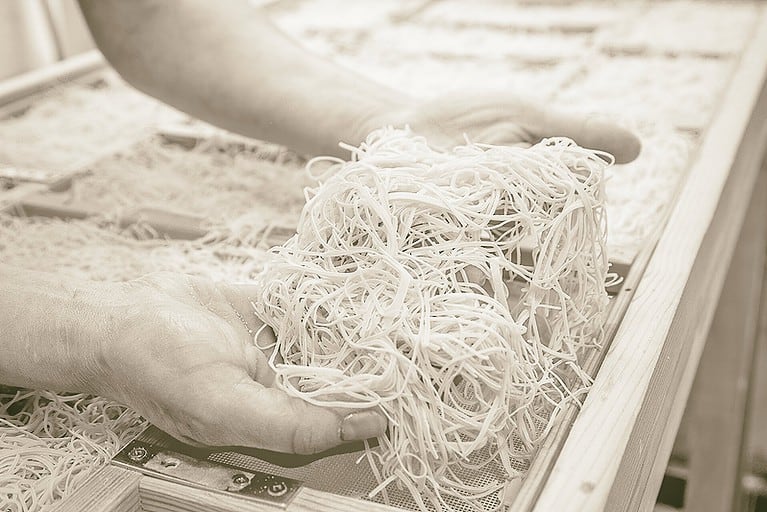
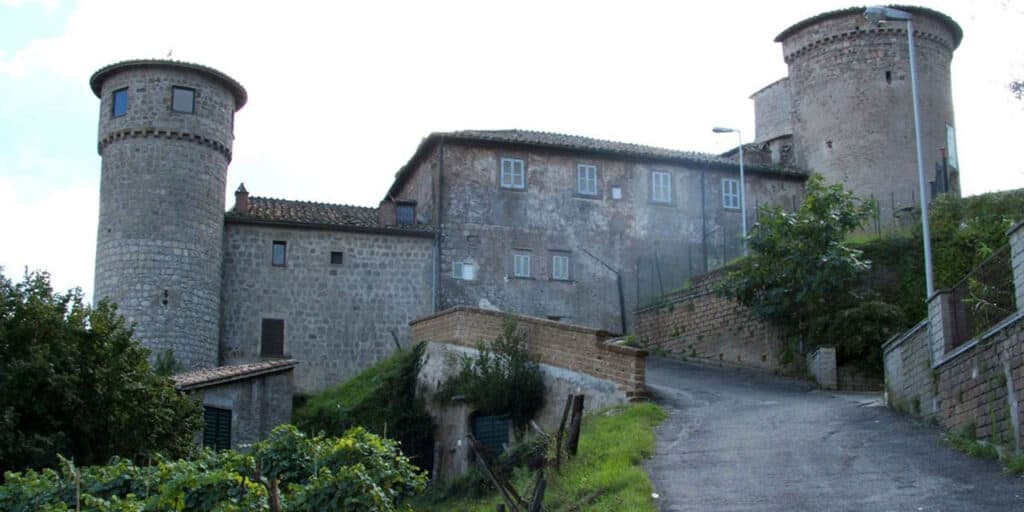
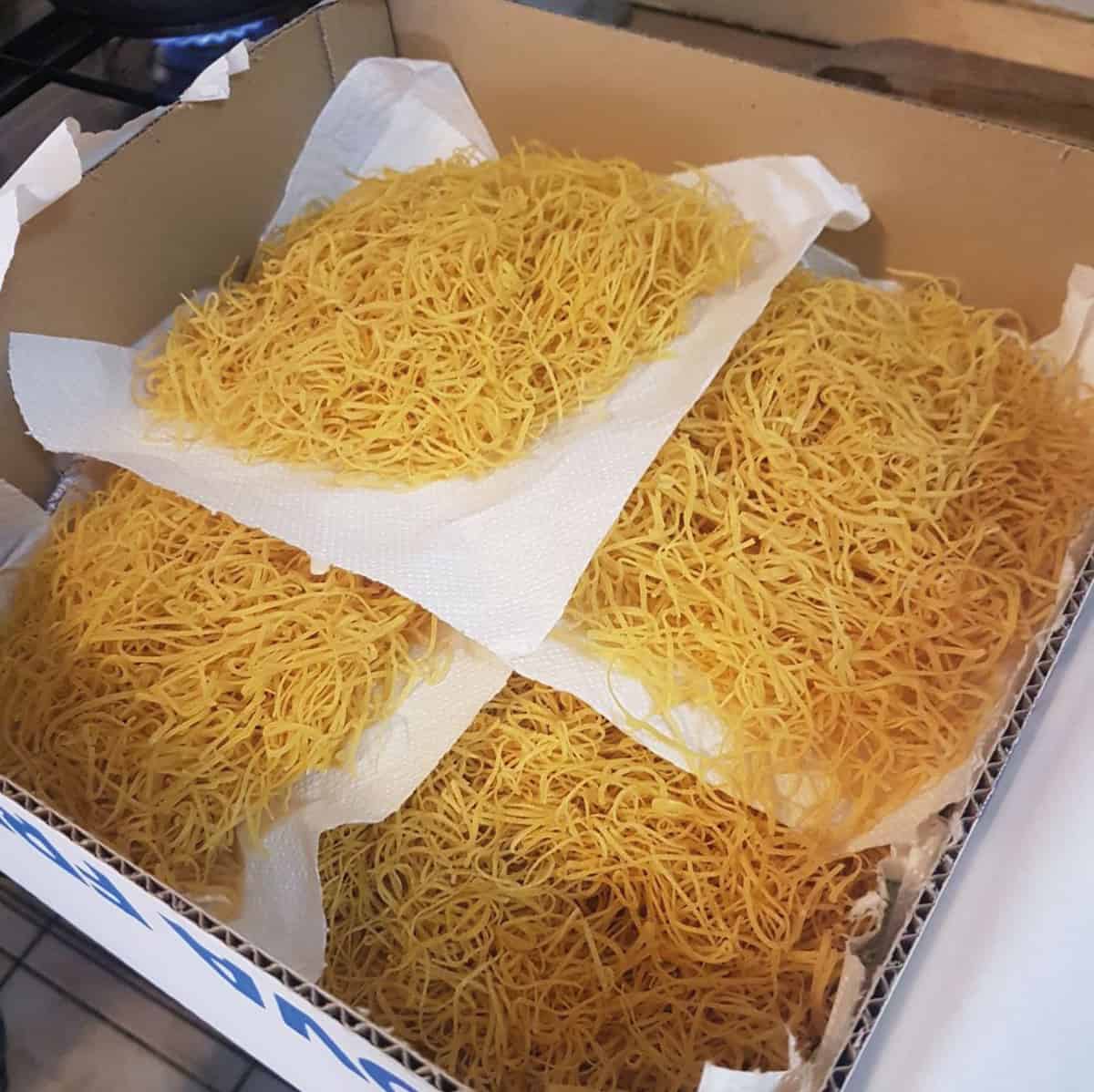
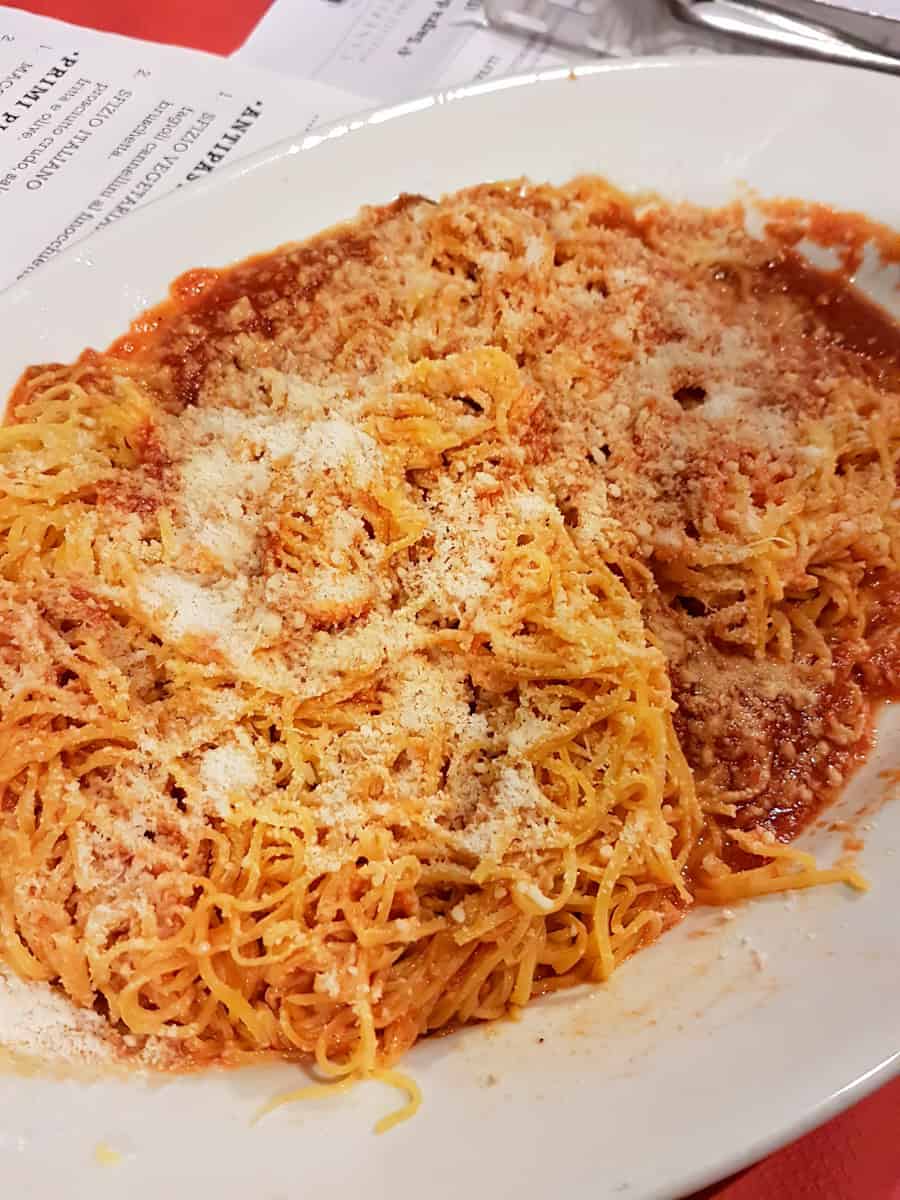
The original recipe for Fieno di Canepina, locally called 'Maccheroni di Canepina', has been handed down from generation to generation since the Middle Ages in this small historical village in the heart of Tuscia viterbese. The decision to call it 'maccaroni' could be linked to the Greek 'makaira', a particular type of knife, wide and slightly curved, with which pasta was cut in the past, giving it that characteristic threadlike appearance. Felice Cunsolo, a wandering journalist, in his 1979 book 'I maccaroni d'Italia' refers for the first time to maccaroni, calling them 'fieno' to emphasise how this pasta format was characterised by being very thin, resembling a strand of wheat in shape. Fieno di Canepina requires a complex preparation and a technique that has remained practically unchanged over the years, ensuring that the ancient characteristics of a product handed down through generations are still preserved. The very thin dough, similar to angel hair, is made with egg and generally produced with 0 or 00 flour. The cut made with a knife point ensures that the pasta has an extremely fine shape and is cooked quickly. Another prerogative of the preparation of this dish is the habit of taking it out of the pot as soon as it is cooked and placing it on a clean kitchen towel to remove the water, prevent the pasta from sticking and to allow it to better collect the sauce. Traditionally it is seasoned with minced meat sauce or chicken giblets, but it is also excellent in the white variant with porcini mushrooms from the Cimini Mountains.
The product
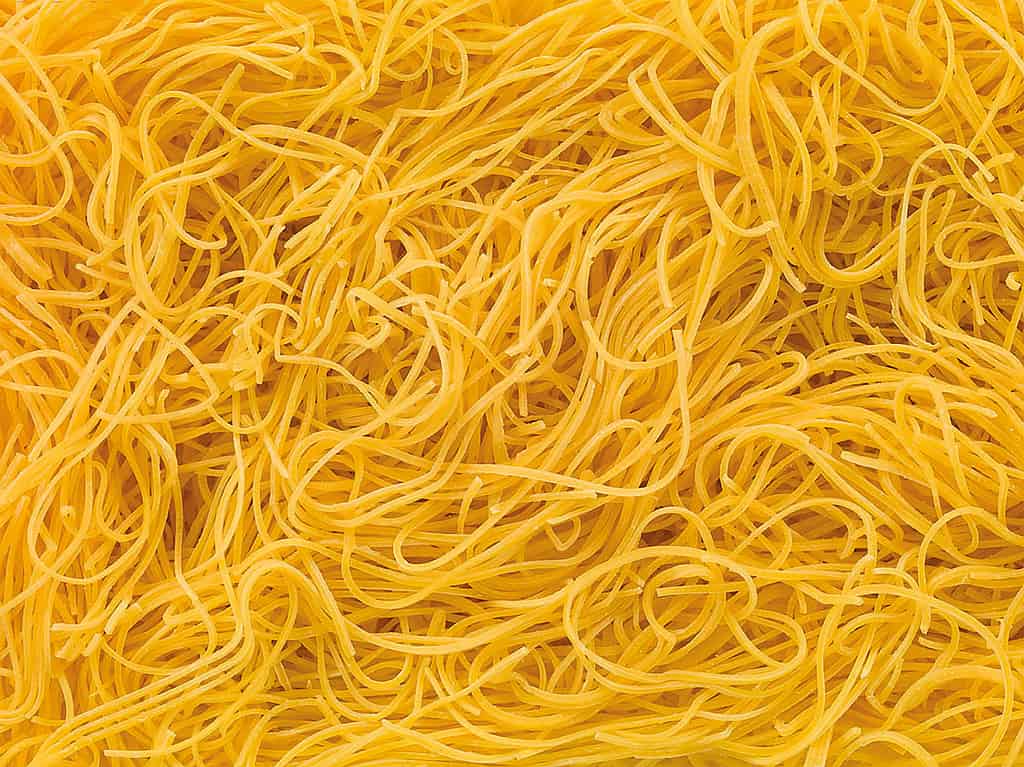
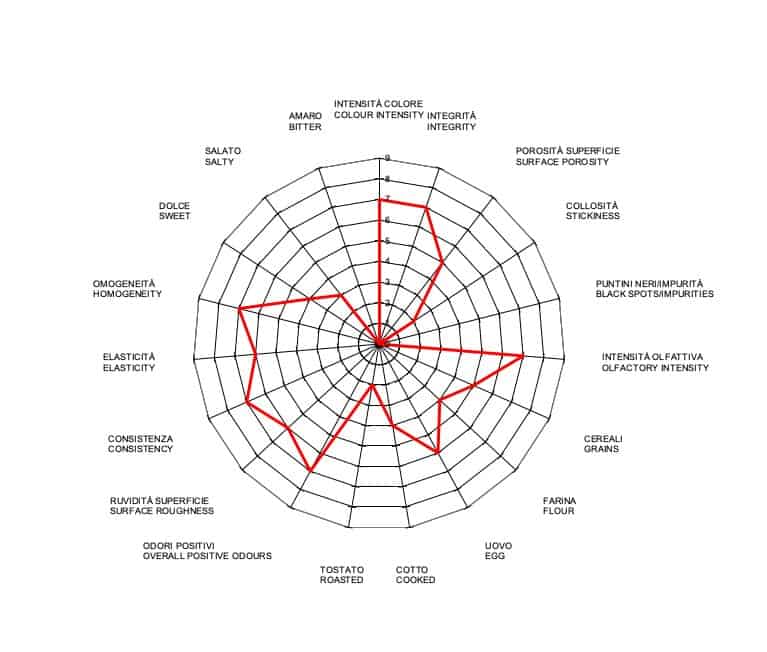
Fieno canepinese has a uniform golden yellow colour and is characterised by high integrity after cooking. The high olfactory intensity is characterised by notes of cereals, flour and eggs combined with a light toasted hint. The taste is harmoniously sweet and salty. Good consistency and elasticity.
DELFINA BASSANELLI AND THE HAY OF CANEPINA
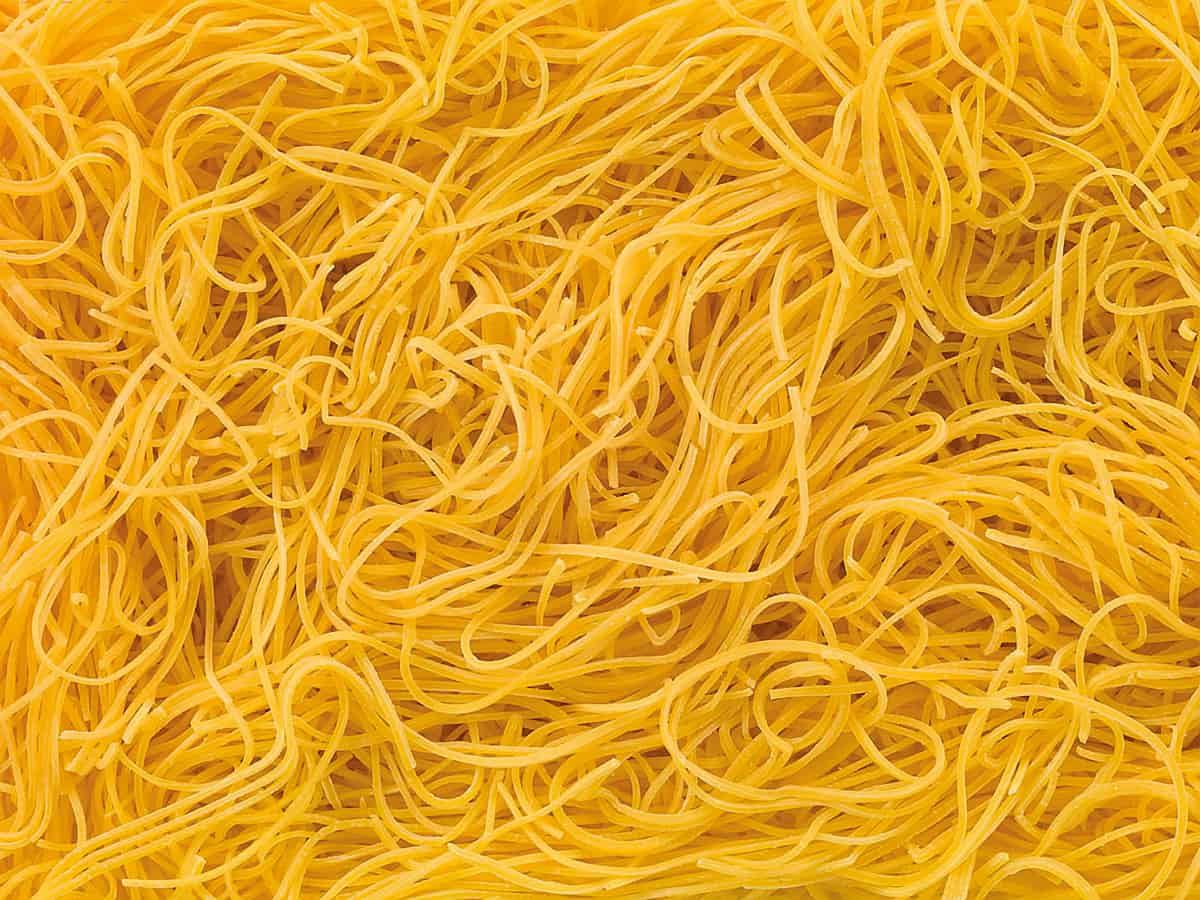
Signora Delfina, a housewife in her eighties, passionately recounts the tradition of Fieno di Canepina: 'This pasta has been made in the village for generations. It used to be called macaroni, then they changed the name to fieno because,' she says, 'it looks like straw, that's why it's called that'. With nostalgia, she recalls: 'I have always seen it being made since I was a child, not by my mother, however, who worked as a baker, but by the other women in the village. They all made pasta, that's how I learned!'. In recounting her recipe, Delfina conveys all the rural wisdom of the past and the pride of carrying on an ancient tradition: 'I always make them at home, but only by hand. I even bought the pasta-making machine, but I don't know how to make it'. And he describes: 'First I break the eggs in the centre of the flour, then with a fork I beat the eggs and add them to the flour. I put the dough to rest for about twenty minutes in a bag, divided into several parts'. The secret: 'The dough must be rolled out after it has dried a little, but not too much, otherwise it will crumble. It must be like meat: neither cooked nor raw'. The next step involves rolling out the dough: 'First I roll out the pastry, thinner than the others. Then when it's dry, I roll it up and cut it with a knife. I make these macaroni small and fine, just like hay'. She proudly concludes: 'If you could see how good they are in your mouth... just by tasting it you would understand!