
07. Ciammella a Zampa di Monterotondo
History
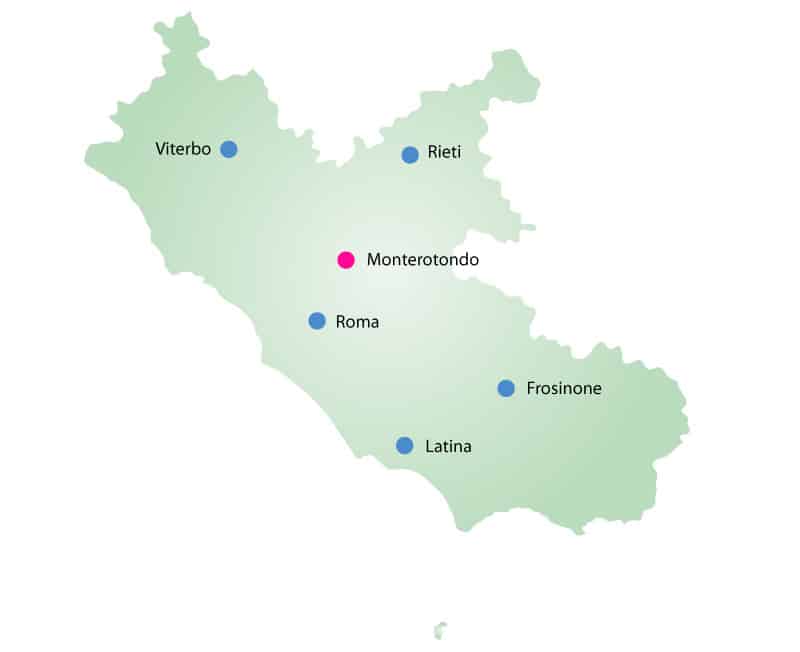
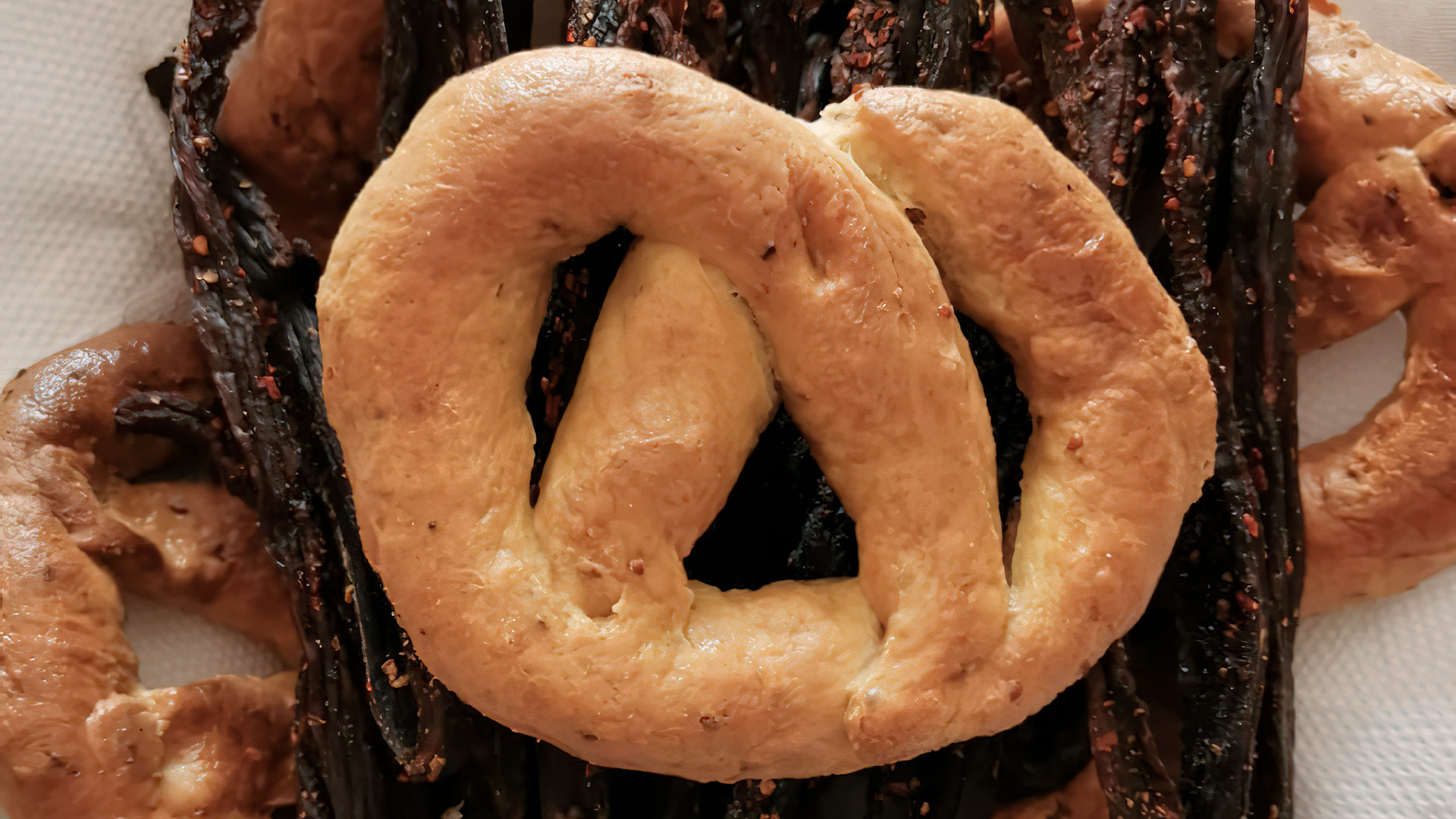
The Ciammella a zampa is a savoury oven-baked preparation, typical of the Monterotondo area, a beautiful town between Via Nomentana and Via Salaria, close to the capital. It is also known as 'Ciambella di Sant'Antonio' because it is traditionally eaten on 17 January, the feast day of Sant'Antonio Abate, protector of animals. It is no coincidence, in fact, that the people of Monterotondo call it 'a zampa', implying 'di bove', because the intertwined shape given to the dough is reminiscent of the end of a bovine leg (the hoof). According to tradition, quintals of doughnuts for the feast must be prepared by the ladies of the village at least a week in advance, to be sold at the religious event dedicated to the saint.
Today, however, it is possible to buy the doughnuts all year round and at all the bakeries in the Monterotondo area. The recipe calls for the use of simple products: water, flour and oil - the three basic ingredients of peasant civilisation - to which aniseed seeds are added to make them more characteristic. According to the two different country versions, they can be prepared with or without eggs. In both cases, however, the process involves boiling and a second baking in the oven, with a long period in between (corresponding to an entire night) to dry them on wooden boards. Ciammelle are excellent eaten as they are, especially when accompanied by white wine or vino cotto.
The product
Ciammella a Zampa has a uniform colour ranging from light brown to golden yellow for the version with the addition of eggs. Its aroma is characterised by pronounced notes of flour, oil and spicy aniseed, combined with hints of white wine. The taste is harmoniously salty, with a slight sweet and sour note. The texture is quite crisp with a convincing aromatic persistence.
MONTEROTONDO AND GARIBALDI'S ADVENTURE
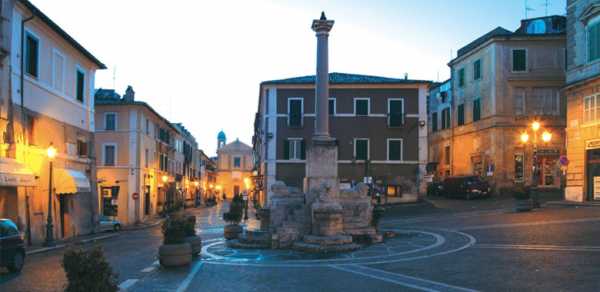
Monterotondo is a village that arose around the year 1000, as evidenced by the medieval core of the old town with the Orsini-Barberini Baronial Palace (heavily restored after the Avezzano earthquake of 1915). The churches of Santa Maria delle Grazie and Santa Maria Maddalena, commissioned by the Barberini family during their seventeenth-century rule and probably designed by Bernini, are also worth a visit.
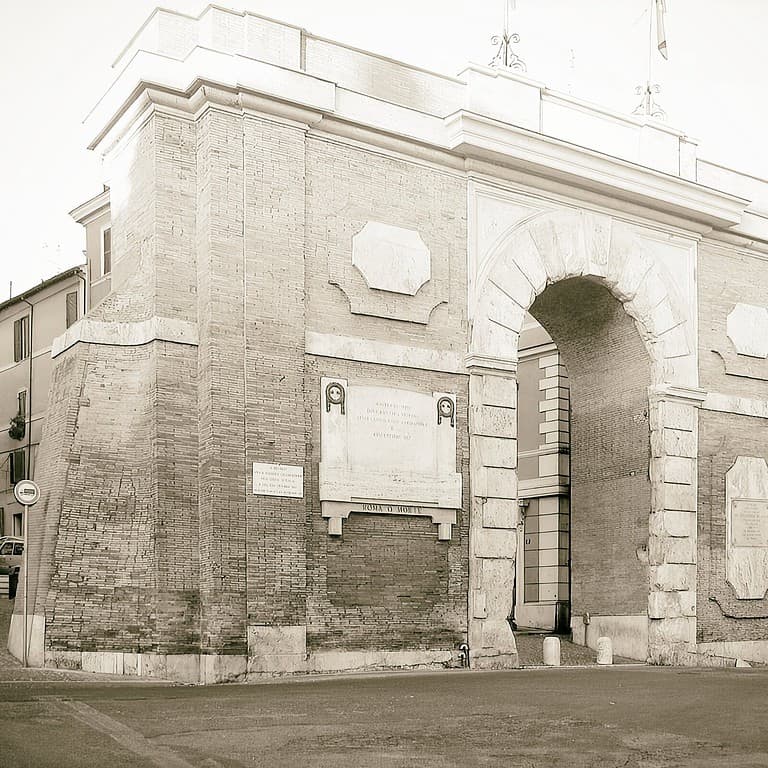
But Monterotondo is also known for being the theatre of battle for Garibaldi's troops who wanted to occupy the town in 1867, whose position controlling the Salaria and Nomentana roads was to be an excellent starting point for the advance on Rome. He escaped from Caprera. Garibaldi joined the Red Shirts and on 25 October, at first light, launched a double attack at Porta Romana and Porta Ducale. Dense rifle fire from the papal troops barricaded in the fortress repulsed both attacks. The general then ordered a cart filled with sulphur and dry wood to be prepared, and during the night he drove it up to Porta Romana, setting it on fire and occupying the city. The Ossuary of Garibaldi's Fallen, the Parco della Rimembranza and the plaque on Porta Garibaldi (formerly Porta Romana) bear witness to this feat, as well as the words of Garibaldi himself, who praised his volunteers as follows: "They assaulted a walled city with barricaded gates, cannons and garrisoned by expert marksmen that priests have been giving to Italians for so many centuries, with an impetus of which Italy can be proud!"