06. Bride and Groom's Donut of Rocca di Papa
History
The preparation of the 'Ciambella degli Sposi' (Bride and Groom's Doughnut), a typical biscuit of the Rocca di Papa municipality, made with simple ingredients such as flour, eggs, sugar, extra virgin olive oil (or butter), aniseed liqueur, yeast, salt and the grated peel of a lemon, is closely linked to the wedding rite. In fact, it seems that the doughnut was brought as a gift, as a wedding favour, by the bride and groom's family to relatives and friends, thus linked to a distinctive ritual of the Rocca di Papa community. The doughnut was given according to a shared rule, according to numbers that varied according to the degree of kinship between the guest and the bride and groom: six doughnuts for friends and neighbours, i.e. more generally uninvited acquaintances; eight for guests and cousins; twelve for uncles and grandparents and eighteen for the baptismal maid. It also seems that the unusual wedding favours were to be brought to the guests by children, usually chosen from among the bride and groom's grandchildren, who received a small cash tip in return for each delivery.
The tradition linking it to weddings is still alive today: those who taste it wish the bride and groom a long and pleasant future, just like the taste of this doughnut. Consumption is not, however, relegated exclusively to the rite of marriage, the cake is in fact produced and marketed daily by the numerous bakeries located in the historic centre. Among the people of Rocca, it is in fact common to enjoy them at breakfast, dipping them in milk.
The product
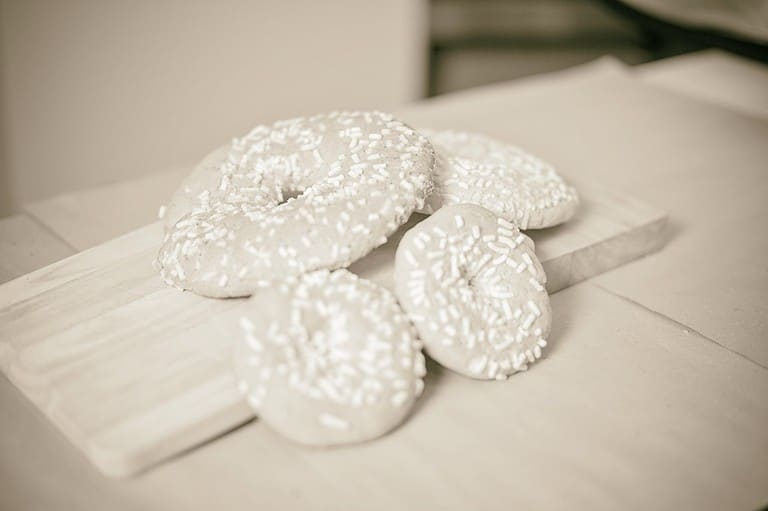
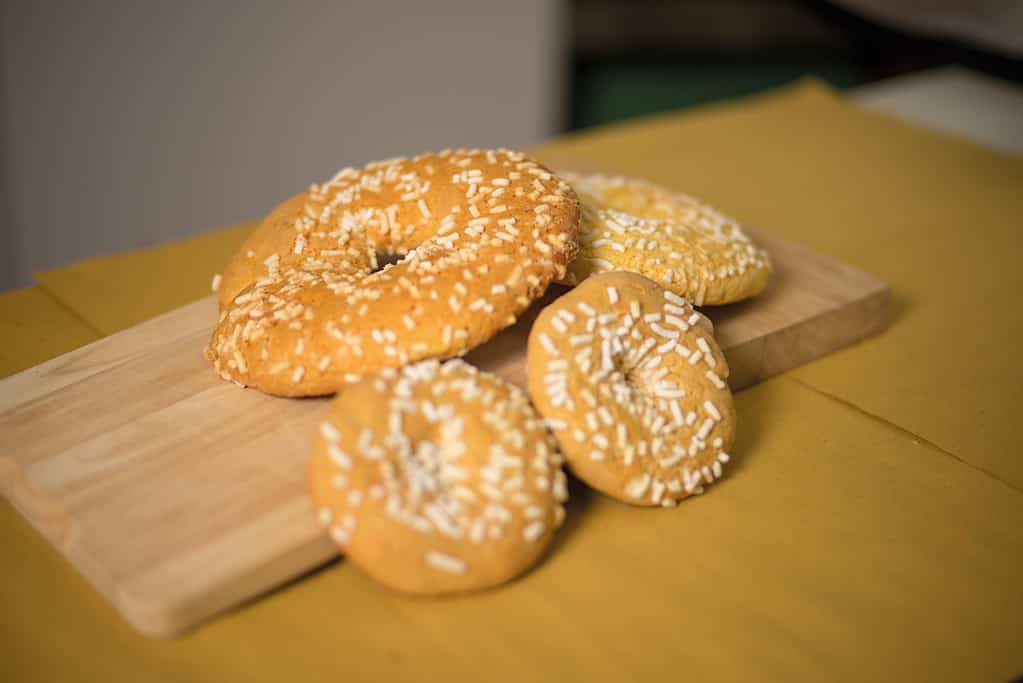
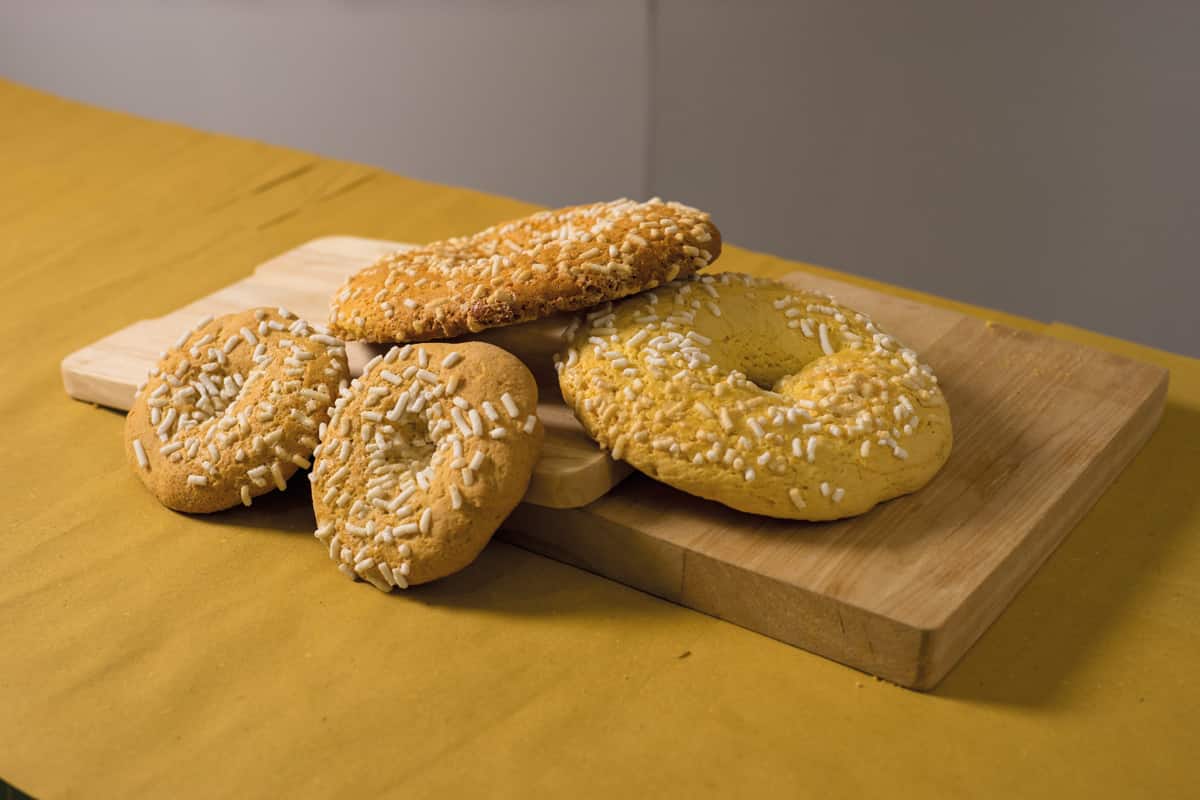
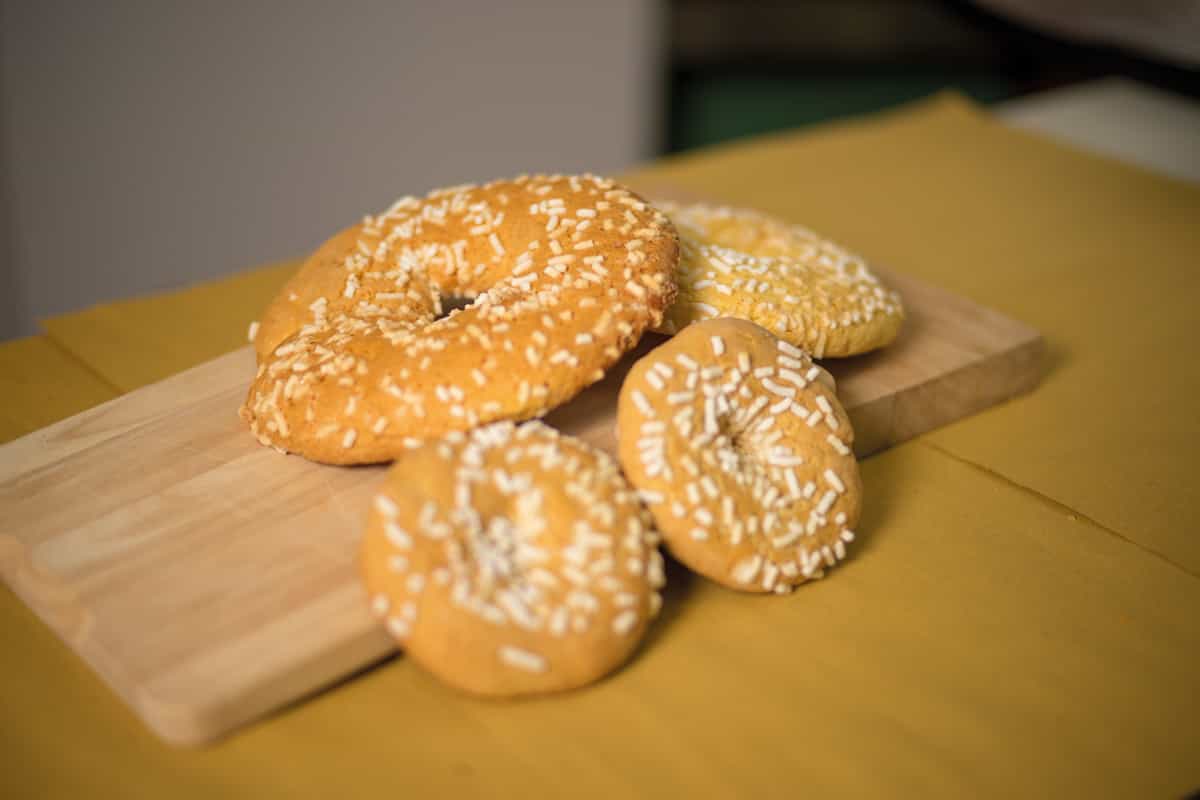
The Ciambella degli Sposi, characterised by its round shape and the sprinkling of sugar grains on its surface, is brown in colour with golden hues. Its high olfactory intensity is characterised by pronounced notes of eggs, combined with hints of oil and liqueur. The taste is harmoniously sweet with a slight salty note. Good crunchiness, chewiness and aromatic persistence.
A PANORAMA FROM ARCHAEOLOGY TO GEOPHYSICS
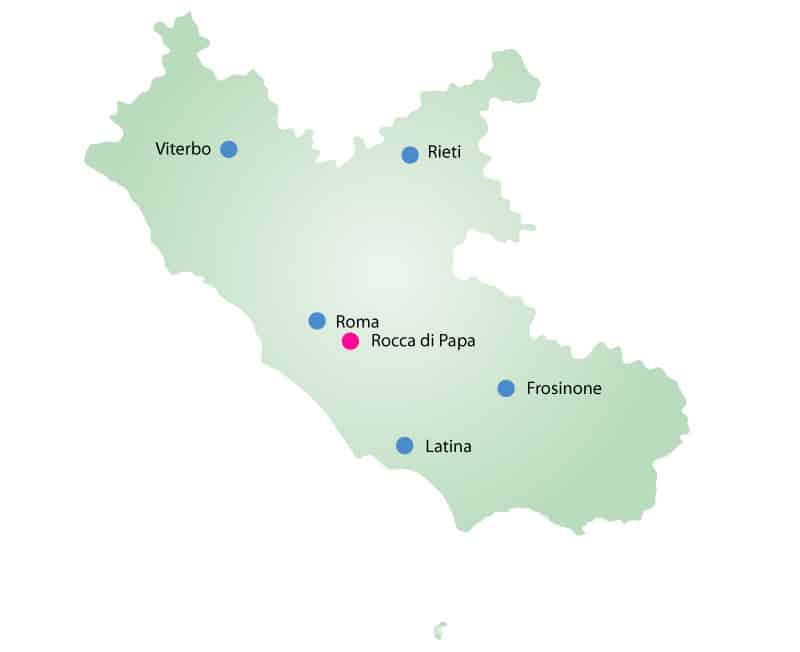
In the heart of the Alban Hills, on the slopes of Monte Cavo, lies the village of Rocca di Papa with its characteristic medieval layout, with houses clinging to the rock and steep alleys. Inhabited since the first millennium B.C., over the centuries it was the domain of important noble families such as the Counts of Tuscolo, the Annibaldi, the Orsini and the Colonna. Among the numerous monuments and places of interest in the town, the Church of Santa Maria Assunta, the Church of the Santissimo Crocifisso, the Municipal Palace and the Villa del Cardinale are worth a visit, as well as the Sanctuary of the Madonna del Tufo and the Palazzolo Convent, which stands, literally, on what remains of the Pontifical Fortress, today an important archaeological site.
The Fortress rises 753 metres above sea level, in a place that offers one of the most extensive views of the Castelli Romani area. The building was erected in the late 12th century by Pope Eugene III and maintained its defensive function until Pope Paul III Farnese ordered its demolition. From that moment on, it was used as a quarry for materials and later underwent a gradual silting up of the structures, which recent archaeological excavations have brought to light, together with various finds belonging to the families that owned the castle. Immediately behind the fortress is another building, however, linked to modern history, the Geophysical Museum, built at the end of the 19th century inside the Geodynamic Observatory.